by Joel V Webb | Sep 24, 2026 | Free Methodism, History, Methodism, Orthodoxy Matters, Sacraments, Theology & Practice
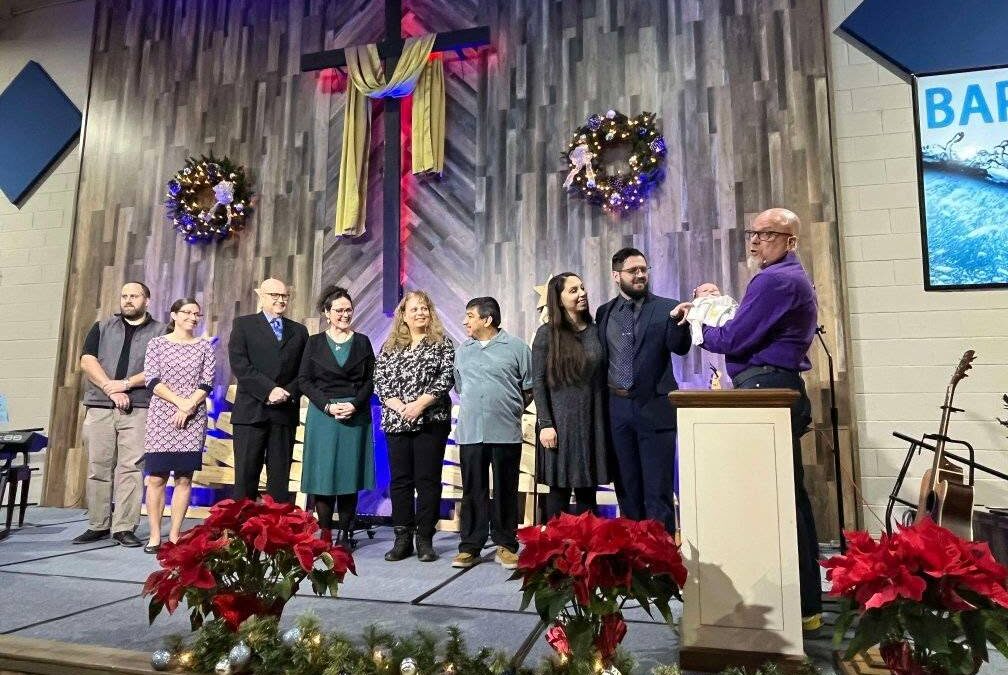
The following article, written by Free Methodist Bishop Emeritus Paul N. Ellis, presents a vigorous historical and theological case for the baptism of infants and young children within the Free Methodist tradition. Ellis argues that parents dedicate their children to God, while the church receives those children through baptism as members of the covenant community and pledges their Christian nurture.
Readers should approach the essay as a historical document and a constructive theological argument. Its language reflects the concerns and ecclesial debates of its original setting, especially the question of whether Free Methodists should replace infant baptism with child dedication.
The contemporary Free Methodist Church continues to affirm baptism as a sacrament and means of grace, and its Articles of Religion state that infants may be baptized at the request of parents or guardians who promise Christian formation. At the same time, current Free Methodist pastoral practice commonly recognizes parent-led infant dedication as an available alternative. The article below represents Ellis’s argument for recovering a stronger covenantal and sacramental practice of infant baptism.
This article was originally published in The Free Methodist Pastor, Summer 1983. is stored, and was scanned by the Marston Memorial Historical Center. You can read the original scanned article HERE
Parents Dedicate, the Church Baptizes
Paul N. Ellis, Bishop Emeritus
Winona Lake, Indiana
I have in my possession The Discipline of the Free Methodist Church, 1874, published fourteen years after the founding of our denomination. Article XVIII of the Articles of Religion includes the following constitutional guarantee:
“The baptism of young children is to be retained in the Church.”
From the beginning until 1974, this statement concerning the baptism of children was the denomination’s position.
In 1974, a new Constitution was adopted by the General Conference and ratified by the annual conferences. The new Constitution provided a fuller explanation of our historic position. Regarding baptism as a sacrament, Article XVII states:
“We believe water baptism and the Lord’s Supper are the sacraments of the church commanded by Christ. They are means of grace through faith, tokens of our profession of Christian faith, and signs of God’s gracious ministry toward us. By them, he works within us to quicken, strengthen, and confirm our faith.”
Regarding the baptism of young children, Article XVII affirms:
“Baptism is a symbol of the new covenant, and since infants are recognized as being included in the atonement, we hold that they may be baptized upon request of parents or guardians who shall give assurance for them of necessary Christian training. They shall be required to affirm the vow for themselves before being accepted into church membership.”
Accordingly, the bishops have made it clear to pastors that ministers violate their vows of ordination in the Free Methodist Church if they refuse to administer baptism to infants or children upon the request of parents or guardians. This is the historic position of the church.
Wesley’s View
The founders of Free Methodism, who felt called to “return to early Methodism,” agreed with Wesley on baptism.
In his Works, Wesley included “A Treatise on Baptism,” in which he wrote:
“By baptism we enter into covenant with God; into that everlasting covenant, which he hath commanded forever, that new covenant, which he promised to make with the spiritual Israel. . . . And as circumcision was then the way of entering into this covenant, so baptism is now. . . .
“Therefore, it is not only lawful and innocent, but meet, right, and our bounden duty, in conformity to the uninterrupted practice of the whole Church of Christ from the earliest ages, to consecrate our children to God by baptism, as the Jewish Church was commanded to do by circumcision.”
See Burtner and Chiles, A Compend of Wesley Theology (New York and Nashville: Abingdon Press, 1944), 266–68.
Inferences From Scripture
We must not forget that the Church of Jesus Christ from its beginning was—and remains—a covenant church, even as Israel was a covenant nation.
In Jeremiah’s promise of “a new covenant,” the prophet declares:
“Behold, the days come, saith the Lord, that I will make a new covenant with the house of Israel, and with the house of Judah” (Jer. 31:31).
The author of Hebrews identifies this new covenant with Jesus:
“Jesus is the mediator of the new covenant” (Heb. 12:24).
There is no dispute that circumcision was, and remains, the sign of the covenant relationship between God and Israel. An adult proselyte entering Judaism must be circumcised. Those born into Judaism, however, are circumcised on the eighth day after birth. The rite acknowledges the ancient covenant among faithful Jews.
In the New Testament, the recorded conversions and baptisms of households strongly imply the inclusion of children. Peter declared:
“The promise is unto you, and to your children” (Acts 2:39).
He did not qualify “children” with the adjective adult. Such a qualification would have seemed unnecessary to the early church, whose members were steeped in the tradition of family unity in matters of religion.
When Paul and Silas were released from the Philippian jail, we read:
“And he [the jailer] took them the same hour of the night, and washed their stripes; and was baptized, he and all his, straightway” (Acts 16:33).
Given the nature of family life in that day, one might expect a specific exception for “infants and young children” if Paul had intended to exclude children from the sacrament.
The classical statement in our baptismal ritual concerning the church’s acceptance of children in baptism is found in the words of Jesus:
“And they brought young children to him, that he should bless them; and his disciples rebuked those that brought them. But when Jesus saw it, he was displeased, and said unto them, ‘Suffer the little children to come unto me, and forbid them not; for of such is the kingdom of God’” (Mark 10:13–14).
A Methodist Scholar Speaks
Addressing the church’s responsibility to receive into its fellowship all those for whom Christ died when they themselves cannot yet make a choice, Olin Alfred Curtis writes:
“The church of our Lord has the right and the duty to claim the helpless. She should take into her atmosphere and association and, if possible, service all people who are unable to make a choice for themselves; not only all irresponsible children, but all the feeble-minded, and all those unfortunate souls who have been mentally wrecked by woes too terrible for human fortitude.”
Curtis describes this group as members “by Christian claim.”
He continues:
“If you ask what infant baptism precisely stands for as a rite, the answer should, I believe, be this: It stands for the sacramental acceptance by the church of the consecration unto Christ of a babe by a home.”
See Olin Alfred Curtis, The Christian Faith (Grand Rapids, MI: Kregel Publications, 1956), 420–21, 438.
A Presbyterian Scholar Speaks
John Frederick Jansen asks:
“Must a child be outside the church? Does not Baptism rather say that from earliest infancy I am brought into the environment of grace and receive the seal of God’s love? Of course an infant does not feel any effect. But who is to say how soon a child becomes aware of love, and why not divine love?
“What shall the church say to its children? Shall it forbid them Baptism? Shall it assume that there is no such thing as a Christian child? Are children outsiders in the church, or are they members of the household of faith? If the old Israel included its children in the family of faith through circumcision, shall the new Israel exclude them?”
See John Frederick Jansen, The Meaning of Baptism (Philadelphia: Westminster Press, 1948), 102, 108.
Some Personal Observations
- Baptism does not regenerate either adults or children. For an adult believer, baptism is a sign of the covenant of grace entered into by faith; a public confession that the believer trusts in Christ’s atoning work for salvation; and a means of grace. For an infant, baptism is likewise a sign of the covenant of grace and a confession by the parents and the church that children are saved—not because they are innocent, but, as are all people, because of the universal atonement made by Christ for the human race. I also believe strongly that baptism is a means of grace to the child. Do we not pray for our children? Do we not anoint them with oil for healing? Should we think grace is given only to persons old enough and rational enough to understand fully the sacrifice of Jesus Christ? If so, who may be baptized? Who understands it fully?
- Parents dedicate the child; the church baptizes the child. Dedication is made by the only persons who can give a child to God: the parents. In baptism, the church accepts the child in a formal yet spiritual manner and pledges, in cooperation with the parents, to confirm that child in the Christian faith. It is meaningless for the church to assume that it can dedicate a child whom it has not accepted into the family of God.
- The Free Methodist Church historically stood within the classical catholic tradition of baptizing children. Until comparatively recent years, the Free Methodist Church stood alongside the Roman Catholic, Eastern Orthodox, Episcopal, Reformed, Presbyterian, Methodist, and other churches of Catholic, Calvinian, Arminian, and Wesleyan traditions in recognizing the baptism of children as a valid sacrament of the Church of Jesus Christ. Today, we are being influenced, to our loss, by Baptistic branches of the church, including the Churches of Christ.
- Replacing baptism with dedication departs from Free Methodist intention and doctrine. In my opinion, Free Methodist pastors who persuade members to have their children “dedicated” rather than baptized turn away from the intention of our founding fathers, fail to transmit the letter and spirit of our Articles of Religion, and miss a significant opportunity to witness to the covenant character of the church.
- The New Testament church was not merely a believers’ church. It was—and continues to be—a covenant church. It receives believing adults into its fellowship, as Judaism has always done, but it also includes the whole Christian family until, if it should occur, a growing child turns away from that fellowship in unbelief, just as an adult may do.
- The nurture of children is therefore of supreme importance. We believe that a child’s confession of Christ as Savior—even at four or five years of age, or perhaps younger—can be valid. Therefore, we have a solemn responsibility to confirm our children in the Christian faith, guide them in Christian love, and bring them to an adult experience of Christ through the revelation of the Holy Spirit. The vows of adult baptism and church membership can become meaningful to a child who is assured that the church has received him or her from infancy into the loving family of God.
by Joel V Webb | Sep 20, 2026 | History, Orthodoxy Matters, Sacraments, Theology & Practice
I confess one Baptism for the forgiveness of sins…
This phrase of the Nicene Creed is declared in my church, like many around the world every Sunday. Much of the time we might not think about it too often, yet it carries much significance. I’ve written about Baptism at other times, and while there is various disagreement surrounding this Sacrament of entrance into Christ’s Body (the Church) very few orthodox Christians groups ignore its importance.
In this particular case I want to focus on the ONE portion of the Creed’s statement in regards to Baptism.
One means one. Article over I guess…
I wish. While this question does come up, for those churches that confess and take seriously the Nicene Creed there is something in common. They do not rebaptize. Baptism, as a Sacrament is seen as a one time act that happens, through which the person (infant or adult) is joined to Christ’s death and resurrection, being opened to and receiving grace by the Holy Spirit, and, drawing from St. Paul in Colossians 2, is a circumcision not done with human hands (v.11-12). Likewise, St. Peter in the New Testament makes the bold claim that baptism now saves (1 Peter 3:21).
The point here is not to get into the weeds on the question of baptismal regeneration and the working of faith. But suffice it to say, baptism is really important. And it is only ever done once. To continue to echo the words of St. Paul in Ephesians where he writes, “one Lord, one faith, one baptism” (Eph. 4:5).
One could then ask, what counts as a valid baptism? How the what we would now call Nicene faith answers is any baptism done in the name of the Father, the Son & the Holy Spirit is a valid Baptism. Why? Primarily because there are non-Trinitarian groups that may baptize only in the name of Jesus. While texts in Acts (2:38; 8:16; 10:48; 19:5) speak of “baptizing in the name of Jesus”, it seems to be referring to the baptism’s identity and authority, not the actual formula.
In regards to Scriptural data, the most evident come from the words of Christ Himself in the famous Great Commission when He commanded the disciples to, “baptizing them in the name of the Father and of the Son and of the Holy Spirit” (Matt. 28:19). Likewise, the earliest church discipleship manual The Didache very clearly states, “Baptize into the name of the Father and of the Son and of the Holy Spirit.” and thus it speaks to the practice of the early church being what Christ commanded in Matthew, not a later development.
But what changed?
Well…as always. Heretics.
The first major debate in regards to Christian baptism came around 255–257 between Cyprian, bishop of Carthage, and Stephen, bishop of Rome. Their point of contention was if people who came into the orthodox faith from a heretical group needed to be baptized. To simplify the debate, Cyprian said they needed to; Stephen said as long as it was in the Trinitarian formula then they were set. The Sacrament was valid, no rebaptism needed. Sadly, both men were martyred before a resolution could be settled.
Next then came the post-Diocletian debate surrounding baptism. A heretical group named the Donatists stated that any clergy who handed over holy books to the Romans during persecution did not have legitimate ministry, and thus, their baptisms were invalid. Likewise, questions arose whether those Christians who recanted the faith to save their lives, and sought to come back into the Church needed to be baptized again.
St. Augustine of Hippo weighs in here and really sets the precedent that Western Christianity follows. Because Christ is the primary operator in Baptism, the “baptizer” (person doing the baptizing) does not impact the validity of the baptism itself as long as it was done in the Trinitarian formula. And, for those coming back into the Church (there was ferocious debate whether or not to let them back in), they did not need to be rebaptized because the work of Christ at their Baptism was still effectual. Even in the Council of Trent in response to the Reformation, the position of the Roman Church to this day is that even a Baptism done by a heretic or pagan; as long as it is done in the Trinitarian formula it is valid.
A brief sidebar before moving on. This point of Christ being the primary actor in Baptism is what by definition makes it a Sacrament. If we are joined in His death & resurrection, and if there is a circumcision that happens, not of human hands to us by God at Baptism…it is not the kind of thing that can be repeated. But, if you just see Baptism as some kind of ordinance, or just a visible sign of an interior faith or decision, then it doesn’t actually mean anything and you can do it as many times as you want.
While there are certainly many other moments in Church history to touch on, the next biggest one comes during the 16th Century and the Protestant Reformation. Despite what many American Evangelicals might believe, Luther, Calvin & the English Reformers, while they certainly had their disagreements with Rome, they didn’t throw the baby out with the bathwater (pun intended). They all still held to some form of Christ truly being present in the Eucharist, they believed in Baptismal regeneration, held to some of the Marian dogmas, and had other views that would shock many today.
But it was the radical reformers who took things to the next level. It wasn’t good enough to separate from the accretions and power structures of Rome, you had to get rid of it all. (I wrote a piece on the radical reformers, and how I DO NOT like them at all. Despite their good intentions). One of the practices that rose among them was the rebaptizing of believers, even those who had already received baptism as infants. This is where the major break takes place in Chrisitan theology and practice in the Church. Now called the Anabaptists (a name given to them by their opponents), the practice is now found among many Chrisitna groups in the West; among groups like actual anabaptist denominations (Mennonites, Missionary Church), Baptists (Reformed and not), and generic American Evangelicalism. I know this part is very brief, and does not cover the full extent of their beliefs and practices, but you get the jist.
So now the big question comes. What stream are you in?
If you are someone who is a Methodist of any stripe, be it Free (like myself), Global, United, Nazarene, Wesleyan etc… your theological roots and inheritance is not found among the radical reformers. It is of the English Reformers like Thomas Cranmer, Lancelot Andrews and Richard Hooker, who like Luther & Calvin did not get rid of the ancient practice of the Chrisitan faith from the Early Church as likewise demonstrated in Scripture. So what does that mean? It means we should not do rebaptisms.
Why? Because Methodists, as our Anglican forebears do, believe the practice of Baptism is a Sacrament. It is an act by which God is the primary actor. Sure, as a parent I bring my child, or a recent convert comes to be baptized; but it is God who is doing a work. Something indelible, that only takes place once.
For those who have been baptized as infants, the continuing of that work happens at Confirmation where that faith entrusted at infancy is carried on by that young person as their own. Or, for someone who maybe has walked away from Christ for a time, and has come back to the faith, there are beautiful services where the vows taken at baptism are reaffirmed and renewed.
But as Methodists we do not rebaptize. Not because we don’t care about people who have come back to the faith or don’t remember their baptism because they were a baby, or didn’t understand the significance of it when it happened. We don’t rebaptize because You can’t repeat circumcision. Whatever the whole work that Christ does in us is marked once, and we then spend the rest of our lives receiving grace from Christ to live into our baptisms.
Whenever we look at the story of Scripture and our own lives it is never God who is faithless and who fails. It is always us. What God did worked. Yes, we need reminders and encouragement, but why do we think we need to repeat something that God only needs to do once?
Baptism matters. God does something in Baptism. Treat it that way.
by Joel V Webb | Sep 16, 2026 | History, Orthodoxy Matters, Review, Theology & Practice
Every once in a while you encounter a book that makes a deep and lasting impact. I remember when I read The Unseen Realm by the late Michael Heiser and my eyes were open to seeing the supernatural thread that was weaved all throughout Scripture. Taking seriously the cultural and historical context of the Old Testament, and its inherent influence on the New Testament provided a massive shift in some of my understanding of Scripture.
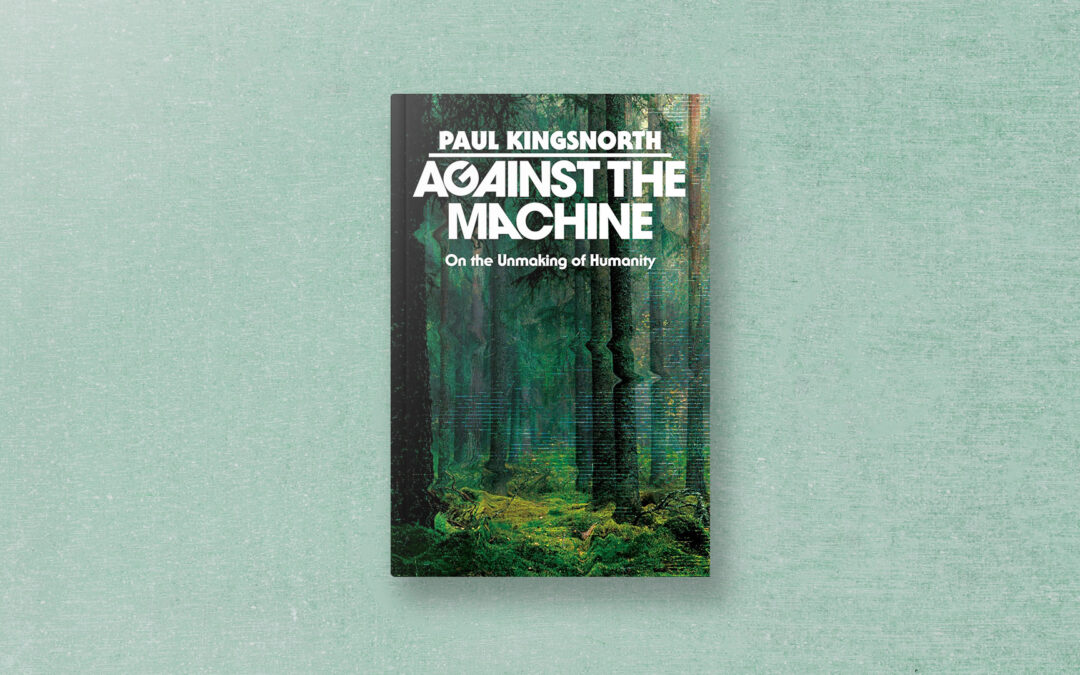
In a similar vein that happened once I finished the first chapter of Against the Machine by Paul Kingsnorth. Published in 2025, I first encountered this book when it was referenced during a plenary session at a conference I was attending. And then, a few months later, one of my Facebook friends posted a picture of the beginnings of one of the chapters, and I knew it needed to be on my reading list.
Kingsnorth opens, naming the reality that we know something is wrong in the West. As he states in his introduction, “I was sure of something else too: that the political and cultural upheavals which continue to roil the West have historical, technological and ultimately spiritual roots.” And it is this theme that he carries through the entire work with a scary amount of accuracy, tracking and tracing why we are where we are today.
As a personal note, this book came at a providential time. A few years ago when I read St. Augustine’s City of God, I felt a huge sense of affinity with what he was writing about. The seemingly timeless Roman Empire in a state of rapid decline and collapse, and having to ask the hard questions about the why. We are living in a similarly transitional time in history. As Kingsnorth points to, “The West” began in earnest around 1000 AD, with it;s apex in the high Medieval period, and then since the 15th and 16th centuries, it has been a slow march into the lightspeed acceleration of our era of advancing technology.
Kingsnorth is honest, there is no perfect society. The West has many skeletons in it;’s closet, and hanging from the battlements. And despite the narrative of critical theorists, every culture and society in the history of humanity does. He is not shy about addressing these issues, and in doing so provides an even playing field to address why we are where we are.
The feeling that is addressed most commonly in the book is the feeling (that I myself feel at times) is of not being rooted. Sure, I have a hometown, place I live, I know a bit about my genealogy and yet it feels like something is missing. This was highlighted even more when I lived in Cameroon for a year. Spending time in various villages, and with people who were connected to their families, and not just to people but to the land. Yet, in the modern west, we are not connected. Land is just where we are, and there is nothing special about it. And that is part of the problem. Not that we worship or idolize the land, but we are not connected to it, And it is this feeling Kingsnorth not just describes, but diagnoses.
Tracing the history of the West through to our day into what can be labelled The Faustian Age, where we are striving for knowledge, power, and self-realization, often associated with the themes of ambition and the pursuit of the infinite. This perfectly describes our time. Totally apprehended by materialism, we seek to not just know, but control, extract and break all limits. And, this is a culture that is dead. While the West began as Christendom, we have taken Christ from His throne, and eventually that vacancy will be filled. But until then, we will continue to experience the death throws of a culture in unrooted freefall.
Everything in our age is about limitless growth, progress, secularism, and ultimately a deep disenchantment that all of us feel when we think about it for more than am inute. It is this way that Kingsnorth thus defines “The Machine”
This, then, is the Machine. It is not simply the sum total of various individual technologies we have cleverly managed to rustle up—cars, laptops, robot mowers and the rest. In fact, such ‘technics’, as Mumford calls them, are the product of the Machine, not its essence. The Machine is, rather, a tendency within us, made concrete by power and circumstance, which coalesces in a huge agglomeration of power, control and ambition.
Kingsnorth then spends most of the book detailing the many different ways that the Machine was developed and grown at a steady and increasing pace for it’s own existence. Culture, the thing that once served people in the role of commonality of those around us has turned into the thing that actually uses humanity as its fuel to keep it going, in it;s own version of The Matrix.
It is this question of culture that becomes the pivotal core of the discussion of not just why we are here, but also what we need to do in seeking to leave or be against he machine. He concisely lays out culture as the summation of the 4 P’s. People, Place, Prayers, and Past:
Past. Where a culture comes from, its history and ancestry.
People. Who a culture is. A sense of being ‘a people’.
Place. Where a culture is. Nature in its local and particular manifestation.
Prayer. Where a culture is going. Its religious tradition, which relates it to God or the gods.
Similarly, Kingsnorth identifies the core realities of the Machine in the four S’ which represent not just “the culture of the Machine” but really the inversion culture where things are not defined by what they are, but rather by what they are not:
Science. Where we come from. Science can offer us a non-mythic version of this story, and assert a claim as to the true (i.e. measurable) nature of reality.
The Self. Who we are. The highest good is to serve the self and ensure its longevity.
Sex. What we do. Both the highest means of sacral pleasure and, through public expressions of ‘sexuality’, an affirmation of individual identity.
The Screen. Where we are going. The screen is both our main source of distraction from reality and the interface by which we are directed into the coming post-human reality of the Machine.
These four notions are the “ideology of the Machine” if one can be defined. As you can likely tell, these aspects are very relevant to what we see going on in the world around us. The insanity and lack of logic in the secular sphere, the inability to articulate even obviously true things, and our inability to know what is even going on.
So what about politics? If you are conservative or liberal/progressive you might be mistaken that Kingsnorth is writing this in support of your ideology. He’s not. He is very clear at numerous points that both sides of the political debates in our day and age are simply different parts representing the machine. Conservatism is simply just looking to change less quickly that the other side is wanting things to.The entire political spectrum as we know it is a product of the machine, and is in the end interested in its survival.
Now what about the Church? Well, if we are honest we see how the Machine has influenced and impacted the Church in the West, especially contemporary evangelicalism. Over the last few years the murmurings of conversions of young men, and those in Gen Z & A have started to grow louder. People I know across the board in traditional expressions of Chrisitanity, especially Catholicism, Orthodoxy and Anglicanism in particular are seeing this growing interest, and real growth. Why? Because outside of the necessity for authenticity in an age of advertising, the modern Protestant Church has wholly given in to the methods of the Machine.
How do we plant churches? We set everything up like the launch of a new IPO, gathering resources to then make the biggest bang possible. How do we prepare the next generations of clergy and layleaders in the Church? Give them fundamentals of leadership and management skills that will also serve them well in the secular business world. What about our “worship” and Sunday gatherings? We might have sound theology and a desire to honor God, but change a few words and you don’t have anything that is distinguishable from a concert with a motivational talk in it about how “God can do something for you”.
Our ways of thinking and doing are almost wholly the ways of the Machine, just dressed up in Church language. Do we need something to change? Launch and initiative to get people excited. Something not working as we think it should, restructure and reformat because doing something might help things change how we want them. This part might just sound like complaining or ranting, but there is a point to it which I will touch on later.
So what are we to do with this? Is everything just a drab and depressing situation that is hopeless? With Kingsnorth’s wide usage of seemingly prophetic philosophers and poets (especially the recently passed Wendell Berry), and especially for us as Christians, what does all of this mean?
First, none of this should be a surprise. Just as I referenced St. Augustine and the fall of Rome earlier, we should not think that all is lost. Cultures have risen and fallen throughout history, and who are we to think that we are any different? Yes, while the West spread the word of the Gospel across the earth, the West has also gotten in the way of the Gospel actually doing what it was supposed to, seating Christ as the true and ultimate King over all things. The West has become obsessed with her own grandeur, economic advancement and comfort, all things that detract from the reality that Christ’s Kingdom is not of this world.
The West is in the process of falling. It may outlast my lifetime, but that would be a miracle. Something over the next 50-100 years will take its place. But just as St. Augustine was sure, the Church will continue and the Gospel will be preached, and Christ’s Kingdom will expand, regardless of where the locus of power and culture is.
Secondly, in our world that is even more interconnected and global, we need to think smaller. This does not mean we stop world missions, but for our individual lives (our circles of relationships), our families and our churches we seem to be obsessed with the biggest reach possible. Rather, we need to ground ourselves closer to home. Be who we are, redeemed by Christ. One of the joking quips often used by other cultures is that “White people don’t really have culture”, and in the contemporary sense that’s not totally wrong. Those who are Caucasian and from Western Europe, especially those in North America have lost our distinctiveness. We need to become more rooted and grounded in that. Not for the purpose of tribalism, but so that we can then relate to others at our common points.
One of the defining characteristics of the Machine as Kingsnorth writes is that it steam rolls other cultures to become homogenized within it. From the Black Ships of Perry opening trade in Japan, to the global internet culture that is consuming our cultures into a single blob of humanity; we lose who we actually are. Again, the purpose of this call is to not become more suspicious of those different than us, but how can we truly appreciate others if we don’t even know who we are?
Third, as the Church we need to wholly reclaim what it means to be in and not of. We are all products of our times, and we can never escape that. But we also can be adapted by our times, which can compromise our witness of being of a different Kingdom. The West as it falls is a challenging time. And we might not even be sure its happening, but it is. What that means is that using the means that have brought us to where we are, is maybe not the way we are to be the Church. This isn’t wholly about aesthetics and worship style…but at the same time it is. The Western Church is dominated by the cult of individualism, and until we repent and cast that idol out, we will be stuck spinning our wheels in the mud of the age going nowhere.
I truly believe the Church is indefectable. While she errs, she will in the end accomplish the goal that Christ established her for. And that means that we at times need to course correct from where we have gone off.
The idea of the Machine has been in recent years somewhat grasped in the language of “Empire”. And while that language can be helpful, the idea of the Machine helps articulate the even deeper issues at play. The gods of old have disguised themselves in our modern era (note back to Heiser), and more often than not we are simply Modernists who go to Church. Our minds are shaped and we operate under the premises set out by the Machine (the 4 S’s). What could be the fruit of that?
A fantastic companion book to this would be The Desecration of Man by Carl Trueman, that David Watson, the President of Asbury Theological Seminary wrote a wonderful review of. Trueman and Kingsnorth touch on many of the same ideas, they give complementary language and verbiage to what we are living in now. And while Kingsnorth is a Christian (he converted to Eastern Orthodoxy in 2020), Trueman’s work is significantly more theologically directed as it is philosophical.
So we then, as Christians are ultimately called to be against the Machine. Just as the powers and principalities, and the “spirit of the air” as spoken of by St. Paul in the Apostolic Era, likewise we have “the Machine” as the all-encompassing spirit of the age that seeks to oppose Christ and His Bride. Seeking to hollow us out, distract us from reality and turn us from the beauty that is the creation He created us to inhabit. Resistance to the Machine looks like truly living out The Sermon on the Mount. It looks like rejecting to different degrees the things the Machine desires to make dogma.
There are so many other threads in this work that I did not even touch that are also vitally important and help flesh out the entire picture. But I focused on what I could and what seemed important as I am writing this. So rather, let this wet your appetite, and go pickup the book and read it for yourself.
Kingsnorth ends his work not by giving a tidy list of actionable items necessarily. His work, being more philosophical, seeks to set the stage for us to seek how Christ is calling us into the world of the Machine to shine His light of new life. I will end this review with the last few paragraphs of his book because I cannot put it any better than he.
I have come to the end now, and here is what I think: that the age of the Machine is not after all a hopeless time. Actually, it is the time we were born for. We can’t leave it, so we have to fully inhabit it. We have to understand it, challenge it, resist it, subvert it, walk through it on towards something better. If we can see what it is, we have a duty to speak the words to those who do not yet see, all the while struggling to remain human.
People, place, prayer, the past. Human community, roots in nature, connection to God, memories passed down and on. These are the eternal things. We could form hedge schools to teach them. We could live them in any way we can. We could build communities. We could write books. We could plant trees. We could do anything, really. None of it will ‘solve’ all of the world’s problems, or all of ours. We are still going to die; and so, one day, is the Machine. But what will we do in the meantime? What will we do amidst the rise of the robots, amidst the ascendancy of all these tiny, laughable, tyrannical dreams?
Raindance on the astroturf.
Raindance to call down the Spirit upon them and us. Raindance to defy the Machine. Raindance to remember your ancestors. Raindance to offer up prayers to your home. Raindance to the forest and the prairie and the meadow. Raindance to reclaim your stories.
Raindance to discover where you are and where you come from. Raindance on top of your smartphone until it is nothing but splinters. Raindance against the myths of the age. Raindance against the false gods. Raindance with a smile on your face.
What have you got to lose?
Enter the Dreamtime. Begin the restoration.
Become human again.
Remain human despite it all.
I think that might be what home looks like, in the end.
Amen.
by Joel V Webb | Jul 13, 2026 | Orthodoxy Matters, Theology & Practice
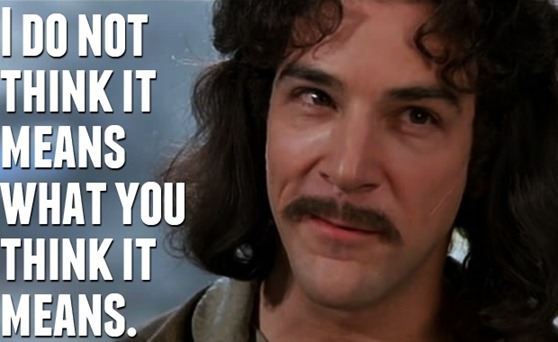
“You keep using that word; I do not think it means what you think it means.”
It is one of the most iconic lines in modern cinema. In The Princess Bride, Inigo Montoya delivers this line in response to Vizzini’s constant use of the word “inconceivable,” a word he clearly does not understand, given how frequently he misapplies it. The humor works because the audience recognizes the gap between the word’s meaning and its usage.
That line often comes to mind when I encounter discussions, especially online, about what are commonly called “Second Commandment violations,” or “2CV” for short.
The argument usually runs like this: because Exodus 20:4 says, “You shall not make for yourself a carved image, or any likeness of anything that is in heaven above…,” any depiction of Jesus, whether in painting, film, or other media, is a direct violation of God’s command and therefore sinful.
To that, I find myself thinking: you keep using that word; I do not think it means what you think it means.
The biggest pitfall with this interpretation is not sincerity. Those who hold this position are often deeply committed believers who want to avoid idolatry at all costs. That instinct is good and worth honoring. But sincerity alone does not guarantee accuracy.
Where this position begins to break down is in two key areas.
First, it fails to read the commandment in context, and not just immediate context, but canonical context.
Sound biblical interpretation requires us to ask not only, “What does this verse say?” but also, “How does Scripture itself apply and clarify this command?” The Second Commandment does not stand alone as an abstract prohibition. It is embedded within a covenantal framework and immediately explained: “You shall not bow down to them or serve them” (Ex. 20:5). The concern is not merely the existence of images, but how they are used.
But the context deepens even further.
In Exodus 32, Israel violates this very commandment with the golden calf. What is striking is not simply that they made an image, but what they claimed about it: “These are your gods, O Israel, who brought you up out of the land of Egypt!” (Ex. 32:4). This is not so much the introduction of a new deity as it is a false representation of the true one, an attempt to render Yahweh visible, controllable, and immediate. That is the heart of the violation.
And then, almost immediately after this, God commands the construction of the tabernacle, which includes images.
In Exodus 25, the Ark of the Covenant is to be fashioned with golden cherubim overshadowing the mercy seat. In Exodus 26, cherubim are woven into the very fabric of the tabernacle curtains. Later, Solomon’s temple is adorned with carved cherubim, palm trees, and open flowers (1 Kings 6:23–29). These are not incidental decorations. They are divinely commanded elements within Israel’s worship.
Even more striking is the bronze serpent in Numbers 21. God commands Moses to make it, and those who look upon it in faith are healed. Yet in 2 Kings 18:4, Hezekiah destroys it because it had become an object of idolatrous devotion.
That example is decisive.
The problem was not that an image existed. The image was commanded by God. The problem was that the image was misused. It shifted from sign to substitute.
So whatever Exodus 20:4 forbids, it cannot be a blanket prohibition on all visual representation. Scripture itself does not allow that conclusion.
The issue is not images. It is idolatry.
Second, it ignores what idol worship actually looked like in the ancient world.
In that world, images were not simply artistic representations. They were understood to participate in the reality they depicted. Through ritual acts, an idol was believed to become a dwelling place of the deity. Offerings were made to it. Prayers were directed toward it. The image functioned not as a reminder, but as a localized presence of the god.
This is the backdrop of the Second Commandment.
God is not prohibiting art. He is prohibiting the construction of rival presences, attempts to represent Him in ways that make Him manageable, containable, or subject to human control. The commandment guards the freedom and transcendence of God.
At this point, an important question arises: what about traditions that use images devotionally, such as icons and statues?
Here we need both clarity and charity.
Before critiquing Catholic or Orthodox practice, we must represent those traditions honestly. It is easy to construct a strawman by assuming that bowing before an image automatically equals worship, or that such practices are simply paganism in Christian dress. But those claims do not reflect how these traditions understand themselves. As Christians, we are called not only to truth, but to truthfulness.
Both Roman Catholic and Eastern Orthodox theology carefully distinguish between worship (latria), which is due to God alone, and veneration (dulia), which is honor given to saints, with a unique form (hyperdulia) accorded to Mary. The Second Council of Nicaea (787) articulated that honor given to an image passes to its prototype. The image is not the endpoint, but a means of directing honor toward Christ or His saints.1
In the Eastern Orthodox tradition especially, this is often expressed through the language of the icon as a “window.” An icon is not understood as a container of the divine, but as a witness that opens the viewer toward a greater reality. It is something one looks through, not merely at. The purpose of the icon is not to localize Christ, but to direct the heart and mind toward Him.
This is deeply tied to the theology of the Incarnation. If the Son of God has truly taken on visible, tangible human flesh, then He can be depicted. The icon becomes, in this sense, a visual confession that the invisible God has made Himself known in Christ. As John of Damascus put it, “I do not worship matter; I worship the Creator of matter who became matter for my sake.”
That is a serious and historically grounded position, and it deserves to be engaged on its own terms.
At the same time, from a Protestant perspective, several concerns remain.
The distinction between worship and veneration, while theologically precise, is not always easily maintained in practice. The Reformers were responding to real pastoral conditions in which the line between honoring and functionally relying upon images had become blurred.
This is strongly reflected in the 39 Articles of Religion of the Church of England,
XXII. Of Purgatory. The Romish Doctrine concerning Purgatory, Pardons, Worshipping and Adoration, as well of Images as of Relics, and also Invocation of Saints, is a fond thing, vainly invented, and grounded upon no warranty of Scripture, but rather repugnant to the Word of God.2
Further, even the “window” language, helpful as it is, raises a question of pastoral caution. Windows are meant to be looked through, but human nature has a way of lingering on the glass. What is intended as a means of directing attention to Christ can, over time or in certain contexts, become an object of misplaced focus.
Here again, the bronze serpent provides a helpful biblical parallel. What God once commanded and used for good can, when misdirected, become an occasion for idolatry.
Finally, the New Testament offers no clear mandate or example of the use of images in the worshiping life of the Church. While that silence does not settle the question, it does suggest that such practices are not essential and should therefore be approached with care.
So we should avoid two equal and opposite errors. We must not misrepresent our Catholic and Orthodox brothers and sisters. At the same time, we must not ignore real pastoral dangers.
The question is not simply whether an image can function as a window.
The question is whether, in practice, it consistently remains one.
The Second Commandment is not violated by the mere existence of an image of Christ.
Scripture itself includes divinely commanded images, even within the holiest spaces of worship. The commandment, therefore, cannot be about representation as such. It is about the misuse of representation, treating something created as if it were the Creator, attempting to bring God under our control, or substituting a manageable image for the living and holy God.
To have a painting of Jesus, to portray Him in film, or to use visual depictions for teaching is not, in itself, a sin. The question is not whether an image exists, but what role it plays.
Does it point beyond itself to the risen Christ revealed in Scripture, or does it subtly replace Him?
The true danger is not that we might depict Christ. It is that we might reduce Him, whether in image or in imagination, to something safer, smaller, and more controllable than He truly is.
And that is precisely what the Second Commandment was given to prevent.
by Joel V Webb | Jul 7, 2026 | Free Methodism, History, Methodism, Orthodoxy Matters, Theology & Practice
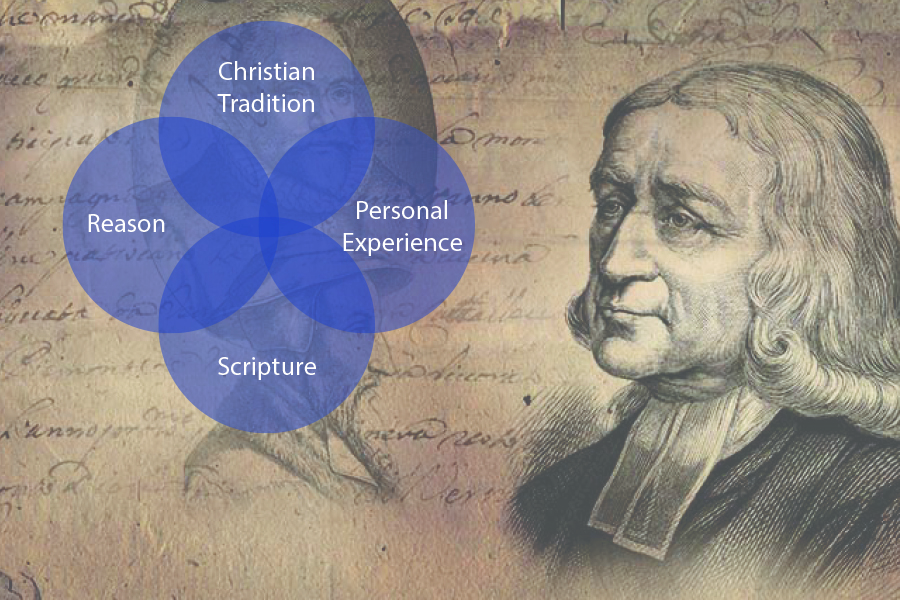
Recently a friend of mine, David Wiesner wrote a fantastic article titled “The Wesleyan Quadrilateral Need to Go”, detailing past and current voices in the Methodist movement, along with his own arguments as to why the term coined by Albert Outler should cease to be a framework for theological discernment in the Methodist-Wesleyan tradition. I think he has a very compelling argument, and there are certainly points that I agree with him, and his sources on. Yet, I have my own reasons that I think support the notion that the Quad should stay as the framework for discerning theology and consensus in our pan-Methodist world.
To lay the groundwork, I will quote from Wiesner’s article concerning the origin and definition of the quad, and take specific note of the historic foundations of this framework that Wesley would have derived from his Anglican heritage:
“Outler created the phrase “Quadrilateral” as a way of trying to describe how Wesley came to his theological conclusions and thus as a means for Methodists to likewise do the same. Outler selected scripture, reason, tradition, and experience as the four “legs” of the Quadrilateral based on his understanding of Wesley’s writings and his perception of how Wesley thought, not from anything explicit that Wesley said. Insofar as Wesley remained a devoted Anglican his entire life, it’s more than fair to say Wesley was familiar with the use of scripture, reason, and tradition because (as noted in the quote above) that was and remains the Anglican Trilateral formulation (or Triad) for discerning theology, and adding experience to the mix certainly reflects the importance Wesley placed on spiritual or converting experience within the Christian life.”
There are two arguments of the seven made in Wiesner’s article that I wish to address, and in the order that he did as well. The first, and what I think is the most compelling of these arguments is the misuse of the Quadrilateral. One of the most obvious realities to anyone with eyes is that the United Methodist Church abused and bastardized the Wesleyan Quadrilateral. I am not mincing my words here because there is no way around it. The theological desolation and rejection of Christian orthodoxy that has been seen in the last generation is a result of theological liberalism abusing the quadrilateral to bend orthodox interpretation of Scripture using experience.
Because of this, the Global Methodist Church (GMC) has taken steps away from the quad. This is witnessed in the sourcing of David Watson and others in Wiesner’s article. And I totally and completely understand this move. To see how Outler’s synthesis was abused to allow for everything it did (something Outler himself admitted and regretted towards the end of his life), it makes sense to want to separate from that synthesis and move to a different framework.
That being said, the abuse or misuse of something does not delegitimize the value or goodness of that thing. Just like people blame the Church for the ills and wrongs done to them presently and historically, that in very many cases is true, does not make the Church bad. But it does show the need we have for Christ. And, I would argue the same is true for the quad. The misuse of it by the UMC and others does not negate the need and goodness of it. As we examine its misuse and abuse, we see how its wrong application has wrought the fruit we see now.
The primary problem was how Scripture was relegated to the same level as the other elements of tradition, reason & experience. To understand the quad with Scripture as equal is to not understand the Protestant theological framework, nor is it to understand how Wesley would have understood how to come to the right understanding and doctrine.
I am not in the Sola Scriptura camp. To be of the Anglican heritage, having the synthesis of theologians such as Robert Hooker in his Laws of Ecclesiastical Polity, which would have been foundation to Wesley and his framework (thus the three-legged stool) is to know that the issue is not the truth and reliability of Scripture. The place of diversion comes down to the interpretation of said Holy Scriptures. Hooker at the time of his writing was primarily locked in a theological back and forth with the Puritans who were dogmatically grounded in Continental European Calvinistic theology, and thus if it wasn’t plainly in Scripture then it was wrong (a simplification, but fundamentally true).
Rather, Hooker wrote, “What Scripture doth plainly deliver, to that the first place both of credit and obedience are due; the next whereunto is whatsoever any man can necessarily conclude by force of reason; after these the voice of the Church succeedeth.” (Laws of Ecclesiastical Polity). He also wrote, ““It sufficeth therefore that Nature and Scripture do serve in such full sort, that they both jointly and not severally either of them be so complete, that unto everlasting felicity we need not the knowledge of any thing more than these two may easily furnish our minds with on all sides.” In providing this framework, we see that the issue is not the authority of Scripture, but what we do with interpretation, and with things that scripture does not expressly address.
The reason we must have an avenue of theological synthesis is because heretics use the same Scripture we do. If you listen to the Road to Nicea podcast, or go deeper down the rabbit trail and actually read the Church Fathers (something I think EVERY pastor should be required to do), you see how the argument of the heretics such as the Arians, Gnostics and the like have their root in Scripture. As wrong and faulty as their theology is, it is the interpretation of Scripture that leads to the wrong theology.
So again, the issue is not Scripture itself, but how we come to understand what Scripture is teaching. Because if you have talked theology with someone with aberrant or heretical theology (like I have), they quote Scripture left right and center until their faces are blue. The diversion is that what they believe is not found in the Grand Deposit of faith, handed down to the saints by the saints who have come before, ultimately found in the teaching of the Apostles. That is why we need the Quadrilateral.
It is with this understanding that our conception of the Quadrilateral needs realignment. Scripture must be the unrivaled head of the quad. Yes, tradition, reason & experience are used in the synthesis of what Scripture is saying, but they can never go against what Scripture plainly teaches. And so my encouragement for both David, and those in the GMC (I have both family and dear friends apart of it), is that the problem is not the quad in and of itself, it is the abuse of the tool. Correct the imbalance in the framework of interpretation, don’t jettison the baby with the bathwater (don’t get me started on the paedobaptism discussion, I’m always ready to defend this Scriptural and historic Christian practice!).
Then we come to the second main augment that Wiesner makes, “The reality of how the Church determines theology is a collective and Spirit-infused enterprise, and we should encourage that corporate method instead of the implicitly-individualized method of the Quadrilateral”. My biggest contention with this is that I feel this is a category error. Wiesner commits a category error if he assumes the Quadrilateral’s purpose is to describe exactly the procedural forms the apostles used in Acts, rather than to articulate a method that makes the Spirit‑infused and corporate enterprise of the church intelligible and applicable today.
Again, the concern of this argument is the over individualization of the process that I believe is corrected by right weighting of Scripture as the highest authority, and then I would even posit that experience is the bottom of the pile, with it needing to be ultimately subject to Scripture first, then tradition & reason, before we interject what our experience says.
Part of the reason I am so ardent about this is because I grew up in a theological landscape that had no real and discernable process for making or synthesizing theological decisions outside of the personal experiential authority of a few key leaders. It was not a process or a framework that anyone would be held to if they deviated away from it. Just like how every Sunday in my church’s liturgy we declare the Nicene Creed following my sermon. And, I have explicitly told my congregation the purpose of doing so is that if I preach something contrary to the truths we are declaring, I am to be held to it and corrected.
The quad, I believe, is supposed to function as such for us in the pan-Methodist world. It is a framework that we run ideas, concepts and theologies through to see if it is in concert with true Christian doctrine. As an example, I can take the new Social Standards that the UMC passed just a few years ago following the mass disaffiliation to the new GMC and other similar denominations (like my own parish!). We don’t actually have to go any deeper in the quad than Holy Scripture to see how what was passed is in direct violation of the clear teachings and passages (granted, when you buy into process theology and open-theism, anything is possible). But let’s explore the other elements if we correctly use the quad as intended. As soon as you look at tradition, you will then see that the changes are in clear and direct violation of what the Church has ALWAYS taught, with no grey areas or equivocation. Then with reason and experience, the same conclusion remains: these revisions do not represent a deeper or more faithful reading of Christian truth, but a departure from the settled witness of the Church, the moral logic of Scripture, and the lived moral discernment of the Christian tradition. In other words, when the Quadrilateral is used properly, it does not become a license to baptize novelty; it becomes a means of testing whether a proposed teaching can actually stand within the whole Christian inheritance, and in this case it cannot.
It should be acknowledged that the Church has never discerned theology in a vacuum. Councils, synods, and canonical processes are all legitimate expressions of the Church’s corporate, Spirit-led judgment, and they provide an essential check against purely individual interpretation. The point of the Quadrilateral is not to replace those ecclesial realities, but to give them a coherent theological grammar: Scripture remains the final authority, while tradition, reason, and experience serve the Church as shared and accountable means of discernment. In practice, then, the Quad works alongside the Church’s conciliar life rather than against it, helping to ensure that theological judgments are not merely private opinions, but conclusions tested within the common witness of the body of Christ.
Part of my concern is what is the alternative if the Quadrilateral is done away with? My argument is that the Quadrilateral represents how the Holy Spirit works collectively to bring us to the true doctrine of Christ’s Church. There is a lot of uncharted water if we go a different direction. I have been on the Charismatic/generic Evangelical side of the aisle, where if it process was written down honestly, it would look a heck of a lot like the Quadrilateral. Just like in the Church we need structures and frameworks to operate (like the episcopate), we likewise need to same for discerning how the Holy Spirit is speaking and working in the life and belief of the Church. And I believe the Quadrilateral best represents that vision.
And so, as Methodism in the 21st Century is seeking to figure out who we are, we need the Quadrilateral more than ever. Correctly contextualized and utilized as we seek to determine and define the truth of “the faith entrusted once for all to the saints.” (Jude 1:3 BSB).
by Joel V Webb | Jun 30, 2026 | Orthodoxy Matters, Theology & Practice
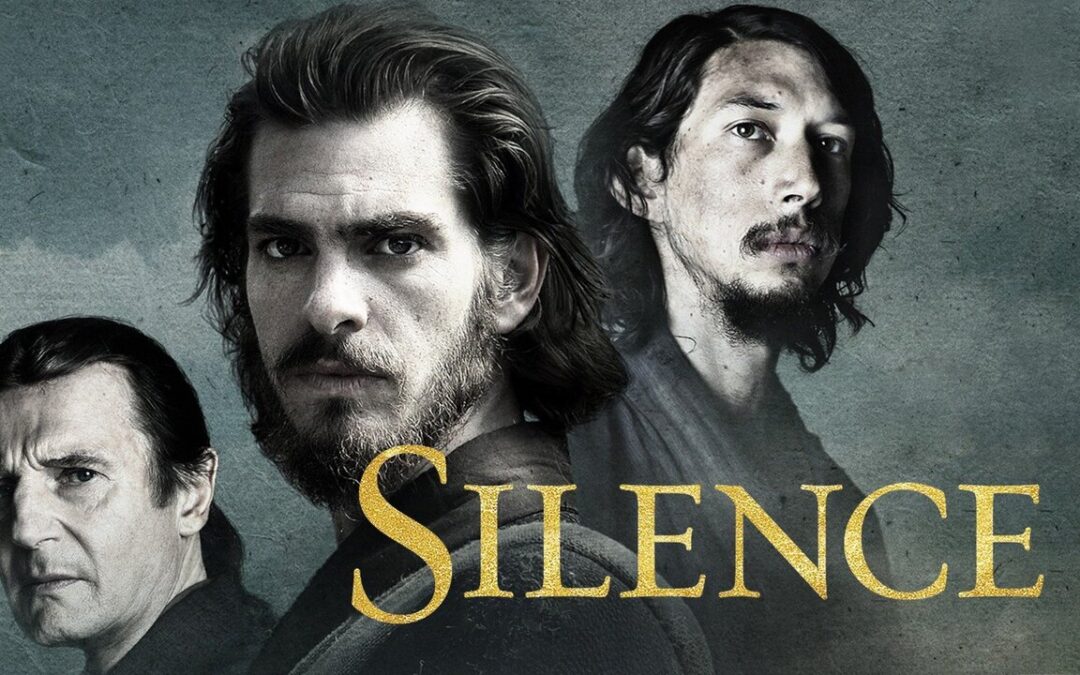
I remember watching the movie Silence a number of years ago when it first came out in 2016. At that time in my life, I was still a part of the more fundamentalist church tradition I grew up in, and so the few others I talked to saw it in a negative light. Yet despite that, there was something in me that thought there was something more there than the sad tale of a person who, through much pain and suffering, leaves their faith.
I won’t give a full-throated walkthrough of the movie, and I highly encourage you to go watch it. It is a testament, firstly, to the sufferings of our brothers and sisters in Christ, still to this day, who go through immense suffering for their faithfulness to Christ—their unwavering allegiance to Him and His Kingdom despite the very real threat of death.
But what does this movie mean for those of us in the West who can still live a life that follows Christ without seemingly costing us anything of significance?
The culmination of the journey of the main character, Rodrigues (played by Andrew Garfield), after his apostatization of the faith, was a comfortable life—a wife, family, status, and a job helping to keep Christianity out of Japan. In the last scene, it is hinted that while he lived his life as someone who renounced the faith and actively worked against it, he may have privately still held to his Christian belief and piety.
And it is in this reality that the problem lies for many of us. It didn’t really matter that Rodrigues may have internally “still been a Christian” because externally no one knew the difference. And that is the challenge for us. Our culture is totally okay with people being Christians…if it’s respectable, nice, and internalized. God forbid we actually believe that our faith in Christ, as members of His Church, means that there are implications in the public sphere. Rather, the zeitgeist of our culture is totally okay with pop stars, actors, politicians, and the general public proclaiming the name of Jesus and being Christian, just as long as it is ultimately private and individual in its impact.
It is this kind of faith that many of us in the West have—a faith similar to that of Rodrigues, where we keep the tenets of our faith to ourselves and live everywhere else as every other secular materialist, and no one knows the difference. But this is not the call of Christ. We are called to pick up our crosses and to follow Him. To deny Him in front of man means that we are denied before the Father, and that is a scary thought to think of.
Does your faith cost you?
Now, this isn’t a call to be a jerk or a Bible-thumping, soapbox-screaming, fire-and-brimstone preacher. That, in itself, becomes the antithesis of the work of the Kingdom. Neither should you be so agreeable to the philosophies, ideas, and ways of the world around us that you are looked at as someone they could work with. We are different, and the difference of being in Christ’s Kingdom means that we will be seen as downright dangerous to the status quo. Why? Because the kingdoms of this world do not wish to turn over their authority to the true and reigning King.
This movie is a call to all Christians—whether you are on the political right or the political left, whether you rightly or unjustly have been given the label nationalist, socialist, racist, homophobe, apostate, or heretic. Maybe the labels are right, but maybe they are not. Rather, are you considered ineligible for integration in the society of the world, or are you able to just float downstream with everyone else?
Silence is a chilling and challenging film to reckon with because we are confronted with the reality that most of us are more like Rodrigues than we like to admit. God, have mercy, and help us by granting us the strength to love and serve you no matter the cost.