by Joel V Webb | Oct 5, 2026 | Free Methodism, Methodism, Resources, Theology & Practice
Anyone who has known me for the last few years knows that I am a nerd, especially when it comes to all things liturgical. To highlight this, during the past weekend a pastor friend sent a message asking about why the lectionary readings between the Book of Common Prayer she uses, and the Lectionary readings in her worship planner from Seedbed (Which uses the Revised Common Lectionary) are different. I then proceed to send a 4 minute voice memo about the variances between the ACNA Lectionary and RCL and the developments that brought them to their current forms. So, maybe my knowledge is super specialized and more than I actually need to know; but I enjoy it.
Last week I was very excited that the Global Methodist Church revealed its new draft liturgies for Baptism, Communion and membership/confirmation/baptismal reaffirmation. I knew they were on the way as I am connected to several of those involved in their development and had several inklings as to what they would look like. The liturgies are available for download HERE and they are in a 3-month period of open commenting for suggestions of changes and adjustments.
In the introduction to the document, the Chair of the Liturgy Task Force, Dr. Tesia Mallory who also serves as the Dean of Chapel at Asbury Theological Seminary writes, “At its core, liturgy is the Church’s communal prayer and conversation with God. We believe that our practices of prayer shape what we believe, and what we believe shapes how we live as faithful followers of Jesus. In light of this, we offer this draft resource as a means of honoring Christ in our mission to spread scriptural holiness across the globe through the worship life of The Global Methodist Church”
One of the things we fail to see in our day and age is that worship is formative. Worship is not just the songs we sing, it is every part of our gathered times on Sunday, and every thing we do from the Scriptures we read, the silence we keep, the actions and posture of our bodies, and then the music we sing is a part of worship. This more holistic vision of what worship is, of course includes the summit of it which is celebration of the Eucharist makes how we are formed and give God what He is due a much richer reality than the sickly and myopic picture we often put ourselves in.
In conversations about the liturgies in the lead up to their release, one of the comments concerning them was that they would be the Book of Common Prayer that is contextualized for Methodist worship. And, when you think about it, that is very appropriate. The Methodist tradition gains much when we look back to our Anglican heritage; something that has often been left behind for American Methodists.
I’ll save specific comments about the liturgies for an upcoming podcast episode interviewing some of the members of the liturgy task force. What I will say is that these liturgies have done the solid work of recovery. For anyone familiar with the Book of Common Prayer (especially the 2019 published by the ACNA), there is a lot of material that will feel familiar. The biggest reclamation of these liturgies are the Sacramental elements that have been mostly issued the last several generations in Methodism. The prayer of blessing over the water, anointing of oil/chrism after baptism, What I found to be a wonderful Methodist addition to the baptism liturgy was the Wesley Covenant prayer following the baptism, said by all as a collective affirmation to Christ.
Similarly, in the communion liturgy the use of an explicit epiclesis (invoking of the Holy Spirit upon the elements) and the Prayer of Humble Access (rather than something like a “Prayer for Spiritual Communion”) really land the participant into the gravity and beauty of what happens when we come to the table and encounter Christ as He is revealed in the breaking of bread.
While these liturgies are from the Global Methodist Church, they represent a resource and a sign for the rest of us in the pan-Methodist world as the orthodox core of our heritage is being reconstituted, and the spiritual descendants of Wesley are striving to revive the heart of our movement; a Church that is set on fire by the holy love of God to spread Scriptural holiness across the land.
What should these draft liturgies mean for the Free Methodist Church (my ecclesial home) and other pan-Methodist denominations? We should not delay by our varying capacities to make liturgical adjustments ourselves. This of course is easier said than done, and even ironic in the case of the FMC where liturgy in the same sentence looks like spelling a word with the English “u” in color or something like that.
At this point what is undeniable is the draw for the younger generations is the rooted grounding of liturgy, Sacraments and not being catered to. Something that is sadly confounding to the “boomer generation” who is still seeking to be relevant to the “fellow kids” in the hopes of drawing them. Rather, we need to reclaim as the GMC is doing, not for the sake of loving antiques, but by coming back to the heart of why we gather. Recounting and participating in the ongoing work of Christ in the Gospel which is the power of God.
As of now the Communion Ritual in the FMC Book of Discipline 2023 is a bit like a house originally built in the 1800’s and then has had 4 or 5 additions put on. The Lord’s Prayer is tacked on as an extension of the confession (something very strange, especially considering how Cranmer used the Our Father as a post-communion prayer. Similarly, the language of the “Prayer for Spiritual Communion”takes an almost anabaptist approach to understanding the Real Presence of Christ in the elements.
Supposedly there are big changes coming to the Free Methodist Church. We have no idea what they are because no one in the know has publicly said anything that actually lets us know what is happening. But, I would add to the list of things to adjust or change is revamping our liturgies for baptism and communion to reflect this reclamation of our heritage as we seek to become the Church that is not thrown about by the winds of the time and is rather seen as a steadfast rock (ultimately Christ) that those battered about can cling to.

by Joel V Webb | Sep 28, 2026 | History, Methodism, Sacraments, Theology & Practice
In the study of the theology and practice of John Wesley one of the most evident realities was the very high place that John placed on the Sacraments. When you survey his journals it is obvious he celebrated the Lord’s Supper multiple times as week, and it became a cornerstone of the practice of the early Methodists so much so that it played a part in reshaping how often Communion was celebrated in Anglican parish life from as little as only a couple times a year (usually quarterly) to weekly.
But when it comes to the actual practice of the Methodist societies, class and band meetings, they are seemingly silent on their practice in those settings. While many a modern reader would take this silence to make it seem they were unimportant, I think when you read between the lines, a different story comes to bear. This question was recently pointed out to me by Rev. Dr. Doug Cullum, now retired pastor and faculty from Northeastern Seminary at Roberts Wesleyan University in Rochester New York.
We first need to work from the presupposition that Wesley did not set out to start a church. He was, in fact, a churchman in the Church of England, and remained so for the entirety of his life (something his brother Charles held strongly to as well). And, it wasn’t until the last few years of John’s life that a communion table was even present in one of the established Methodist gathering places.
This silence then is not because the Sacraments of Baptism & the Lord’s Supper were unimportant. Contrarily, they were seen as essential! But the nature of this silence or deficiency seems to be intentional, and it is from this place that we can come to understand the original purpose of Methodism.
John & Charles saw the Methodist movement as a renewal movement within the Church, not as a separate ecclesial movement. So with this in mind you can then see what this “sacramental deficiency” existed. Any Methodist society, class or band was for the spiritual growth of the individual to then go and be active and spiritually alive in the context of their local parish. It was then there where they were to receive the Lord’s Supper as often as it was offered, and to have their children baptized.
It was only when the Methodist movement, specifically in the American context became its own mother church in 1784 did the sacramental practice pass from the Anglican clergy to their own appointed and installed Elders. But what has happened over the last few centuries, as often does with the passing of time, is the loss of the context that provided the basis of understanding what was actually going on on that day.
If we look and see the lack of sacramental practice within early Methodism as an argument from silence, that the Evangelical focus that we are all familiar with was the sole focus, we then lose the full picture of who Wesley was, and the intent for what the Methodist movement was all about.
When you place the original Methodist movement within the context of an already existing parish system where the adherents of society, class and band meetings were already apart of, then it all clicks into place. What could be seen as intentional neglect or unimportance becomes in fact intentional deficiency; where the Sacramental need was already fulfilled in the churches these people were already members of.
What this then means for all forms of Methodism in the 21st Century, which now represent the status of “Mother Churches”, no longer a separate movement within an ecclesial body, but ecclesial bodies of their own is then the responsibility to faithfully administer the Sacraments of Christ. Baptism following birth or conversion, and the Lord’s Supper, weekly or more often as Wesley intended for his followers to partake.
It is this reality, both the Sacramental and the Evangelical that the Methodist movement holds in tension. Not in a contrary way, but in an complimentary way, understanding both for the need of the supremacy of the Word of God to drive us to personal relationship with Christ, and for Christ to then welcome us in through Baptism, and then continually feed us as He promised at the Table where He is both host and feast.
That is the picture of Methodism that Wesley intended for his descendants, a heritage we must reclaim and live in to.

by Joel V Webb | Sep 24, 2026 | Free Methodism, History, Methodism, Orthodoxy Matters, Sacraments, Theology & Practice
The following article, written by Free Methodist Bishop Emeritus Paul N. Ellis, presents a vigorous historical and theological case for the baptism of infants and young children within the Free Methodist tradition. Ellis argues that parents dedicate their children to God, while the church receives those children through baptism as members of the covenant community and pledges their Christian nurture.
Readers should approach the essay as a historical document and a constructive theological argument. Its language reflects the concerns and ecclesial debates of its original setting, especially the question of whether Free Methodists should replace infant baptism with child dedication.
The contemporary Free Methodist Church continues to affirm baptism as a sacrament and means of grace, and its Articles of Religion state that infants may be baptized at the request of parents or guardians who promise Christian formation. At the same time, current Free Methodist pastoral practice commonly recognizes parent-led infant dedication as an available alternative. The article below represents Ellis’s argument for recovering a stronger covenantal and sacramental practice of infant baptism.
This article was originally published in The Free Methodist Pastor, Summer 1983. is stored, and was scanned by the Marston Memorial Historical Center. You can read the original scanned article HERE
Parents Dedicate, the Church Baptizes
Paul N. Ellis, Bishop Emeritus
Winona Lake, Indiana
I have in my possession The Discipline of the Free Methodist Church, 1874, published fourteen years after the founding of our denomination. Article XVIII of the Articles of Religion includes the following constitutional guarantee:
“The baptism of young children is to be retained in the Church.”
From the beginning until 1974, this statement concerning the baptism of children was the denomination’s position.
In 1974, a new Constitution was adopted by the General Conference and ratified by the annual conferences. The new Constitution provided a fuller explanation of our historic position. Regarding baptism as a sacrament, Article XVII states:
“We believe water baptism and the Lord’s Supper are the sacraments of the church commanded by Christ. They are means of grace through faith, tokens of our profession of Christian faith, and signs of God’s gracious ministry toward us. By them, he works within us to quicken, strengthen, and confirm our faith.”
Regarding the baptism of young children, Article XVII affirms:
“Baptism is a symbol of the new covenant, and since infants are recognized as being included in the atonement, we hold that they may be baptized upon request of parents or guardians who shall give assurance for them of necessary Christian training. They shall be required to affirm the vow for themselves before being accepted into church membership.”
Accordingly, the bishops have made it clear to pastors that ministers violate their vows of ordination in the Free Methodist Church if they refuse to administer baptism to infants or children upon the request of parents or guardians. This is the historic position of the church.
Wesley’s View
The founders of Free Methodism, who felt called to “return to early Methodism,” agreed with Wesley on baptism.
In his Works, Wesley included “A Treatise on Baptism,” in which he wrote:
“By baptism we enter into covenant with God; into that everlasting covenant, which he hath commanded forever, that new covenant, which he promised to make with the spiritual Israel. . . . And as circumcision was then the way of entering into this covenant, so baptism is now. . . .
“Therefore, it is not only lawful and innocent, but meet, right, and our bounden duty, in conformity to the uninterrupted practice of the whole Church of Christ from the earliest ages, to consecrate our children to God by baptism, as the Jewish Church was commanded to do by circumcision.”
See Burtner and Chiles, A Compend of Wesley Theology (New York and Nashville: Abingdon Press, 1944), 266–68.
Inferences From Scripture
We must not forget that the Church of Jesus Christ from its beginning was—and remains—a covenant church, even as Israel was a covenant nation.
In Jeremiah’s promise of “a new covenant,” the prophet declares:
“Behold, the days come, saith the Lord, that I will make a new covenant with the house of Israel, and with the house of Judah” (Jer. 31:31).
The author of Hebrews identifies this new covenant with Jesus:
“Jesus is the mediator of the new covenant” (Heb. 12:24).
There is no dispute that circumcision was, and remains, the sign of the covenant relationship between God and Israel. An adult proselyte entering Judaism must be circumcised. Those born into Judaism, however, are circumcised on the eighth day after birth. The rite acknowledges the ancient covenant among faithful Jews.
In the New Testament, the recorded conversions and baptisms of households strongly imply the inclusion of children. Peter declared:
“The promise is unto you, and to your children” (Acts 2:39).
He did not qualify “children” with the adjective adult. Such a qualification would have seemed unnecessary to the early church, whose members were steeped in the tradition of family unity in matters of religion.
When Paul and Silas were released from the Philippian jail, we read:
“And he [the jailer] took them the same hour of the night, and washed their stripes; and was baptized, he and all his, straightway” (Acts 16:33).
Given the nature of family life in that day, one might expect a specific exception for “infants and young children” if Paul had intended to exclude children from the sacrament.
The classical statement in our baptismal ritual concerning the church’s acceptance of children in baptism is found in the words of Jesus:
“And they brought young children to him, that he should bless them; and his disciples rebuked those that brought them. But when Jesus saw it, he was displeased, and said unto them, ‘Suffer the little children to come unto me, and forbid them not; for of such is the kingdom of God’” (Mark 10:13–14).
A Methodist Scholar Speaks
Addressing the church’s responsibility to receive into its fellowship all those for whom Christ died when they themselves cannot yet make a choice, Olin Alfred Curtis writes:
“The church of our Lord has the right and the duty to claim the helpless. She should take into her atmosphere and association and, if possible, service all people who are unable to make a choice for themselves; not only all irresponsible children, but all the feeble-minded, and all those unfortunate souls who have been mentally wrecked by woes too terrible for human fortitude.”
Curtis describes this group as members “by Christian claim.”
He continues:
“If you ask what infant baptism precisely stands for as a rite, the answer should, I believe, be this: It stands for the sacramental acceptance by the church of the consecration unto Christ of a babe by a home.”
See Olin Alfred Curtis, The Christian Faith (Grand Rapids, MI: Kregel Publications, 1956), 420–21, 438.
A Presbyterian Scholar Speaks
John Frederick Jansen asks:
“Must a child be outside the church? Does not Baptism rather say that from earliest infancy I am brought into the environment of grace and receive the seal of God’s love? Of course an infant does not feel any effect. But who is to say how soon a child becomes aware of love, and why not divine love?
“What shall the church say to its children? Shall it forbid them Baptism? Shall it assume that there is no such thing as a Christian child? Are children outsiders in the church, or are they members of the household of faith? If the old Israel included its children in the family of faith through circumcision, shall the new Israel exclude them?”
See John Frederick Jansen, The Meaning of Baptism (Philadelphia: Westminster Press, 1948), 102, 108.
Some Personal Observations
- Baptism does not regenerate either adults or children. For an adult believer, baptism is a sign of the covenant of grace entered into by faith; a public confession that the believer trusts in Christ’s atoning work for salvation; and a means of grace. For an infant, baptism is likewise a sign of the covenant of grace and a confession by the parents and the church that children are saved—not because they are innocent, but, as are all people, because of the universal atonement made by Christ for the human race. I also believe strongly that baptism is a means of grace to the child. Do we not pray for our children? Do we not anoint them with oil for healing? Should we think grace is given only to persons old enough and rational enough to understand fully the sacrifice of Jesus Christ? If so, who may be baptized? Who understands it fully?
- Parents dedicate the child; the church baptizes the child. Dedication is made by the only persons who can give a child to God: the parents. In baptism, the church accepts the child in a formal yet spiritual manner and pledges, in cooperation with the parents, to confirm that child in the Christian faith. It is meaningless for the church to assume that it can dedicate a child whom it has not accepted into the family of God.
- The Free Methodist Church historically stood within the classical catholic tradition of baptizing children. Until comparatively recent years, the Free Methodist Church stood alongside the Roman Catholic, Eastern Orthodox, Episcopal, Reformed, Presbyterian, Methodist, and other churches of Catholic, Calvinian, Arminian, and Wesleyan traditions in recognizing the baptism of children as a valid sacrament of the Church of Jesus Christ. Today, we are being influenced, to our loss, by Baptistic branches of the church, including the Churches of Christ.
- Replacing baptism with dedication departs from Free Methodist intention and doctrine. In my opinion, Free Methodist pastors who persuade members to have their children “dedicated” rather than baptized turn away from the intention of our founding fathers, fail to transmit the letter and spirit of our Articles of Religion, and miss a significant opportunity to witness to the covenant character of the church.
- The New Testament church was not merely a believers’ church. It was—and continues to be—a covenant church. It receives believing adults into its fellowship, as Judaism has always done, but it also includes the whole Christian family until, if it should occur, a growing child turns away from that fellowship in unbelief, just as an adult may do.
- The nurture of children is therefore of supreme importance. We believe that a child’s confession of Christ as Savior—even at four or five years of age, or perhaps younger—can be valid. Therefore, we have a solemn responsibility to confirm our children in the Christian faith, guide them in Christian love, and bring them to an adult experience of Christ through the revelation of the Holy Spirit. The vows of adult baptism and church membership can become meaningful to a child who is assured that the church has received him or her from infancy into the loving family of God.
by Joel V Webb | Jul 7, 2026 | Free Methodism, History, Methodism, Orthodoxy Matters, Theology & Practice
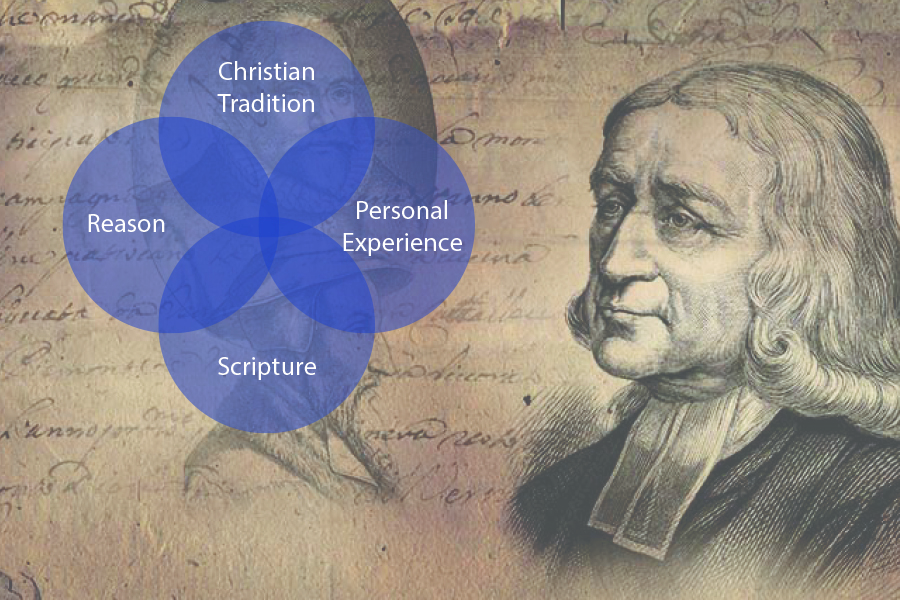
Recently a friend of mine, David Wiesner wrote a fantastic article titled “The Wesleyan Quadrilateral Need to Go”, detailing past and current voices in the Methodist movement, along with his own arguments as to why the term coined by Albert Outler should cease to be a framework for theological discernment in the Methodist-Wesleyan tradition. I think he has a very compelling argument, and there are certainly points that I agree with him, and his sources on. Yet, I have my own reasons that I think support the notion that the Quad should stay as the framework for discerning theology and consensus in our pan-Methodist world.
To lay the groundwork, I will quote from Wiesner’s article concerning the origin and definition of the quad, and take specific note of the historic foundations of this framework that Wesley would have derived from his Anglican heritage:
“Outler created the phrase “Quadrilateral” as a way of trying to describe how Wesley came to his theological conclusions and thus as a means for Methodists to likewise do the same. Outler selected scripture, reason, tradition, and experience as the four “legs” of the Quadrilateral based on his understanding of Wesley’s writings and his perception of how Wesley thought, not from anything explicit that Wesley said. Insofar as Wesley remained a devoted Anglican his entire life, it’s more than fair to say Wesley was familiar with the use of scripture, reason, and tradition because (as noted in the quote above) that was and remains the Anglican Trilateral formulation (or Triad) for discerning theology, and adding experience to the mix certainly reflects the importance Wesley placed on spiritual or converting experience within the Christian life.”
There are two arguments of the seven made in Wiesner’s article that I wish to address, and in the order that he did as well. The first, and what I think is the most compelling of these arguments is the misuse of the Quadrilateral. One of the most obvious realities to anyone with eyes is that the United Methodist Church abused and bastardized the Wesleyan Quadrilateral. I am not mincing my words here because there is no way around it. The theological desolation and rejection of Christian orthodoxy that has been seen in the last generation is a result of theological liberalism abusing the quadrilateral to bend orthodox interpretation of Scripture using experience.
Because of this, the Global Methodist Church (GMC) has taken steps away from the quad. This is witnessed in the sourcing of David Watson and others in Wiesner’s article. And I totally and completely understand this move. To see how Outler’s synthesis was abused to allow for everything it did (something Outler himself admitted and regretted towards the end of his life), it makes sense to want to separate from that synthesis and move to a different framework.
That being said, the abuse or misuse of something does not delegitimize the value or goodness of that thing. Just like people blame the Church for the ills and wrongs done to them presently and historically, that in very many cases is true, does not make the Church bad. But it does show the need we have for Christ. And, I would argue the same is true for the quad. The misuse of it by the UMC and others does not negate the need and goodness of it. As we examine its misuse and abuse, we see how its wrong application has wrought the fruit we see now.
The primary problem was how Scripture was relegated to the same level as the other elements of tradition, reason & experience. To understand the quad with Scripture as equal is to not understand the Protestant theological framework, nor is it to understand how Wesley would have understood how to come to the right understanding and doctrine.
I am not in the Sola Scriptura camp. To be of the Anglican heritage, having the synthesis of theologians such as Robert Hooker in his Laws of Ecclesiastical Polity, which would have been foundation to Wesley and his framework (thus the three-legged stool) is to know that the issue is not the truth and reliability of Scripture. The place of diversion comes down to the interpretation of said Holy Scriptures. Hooker at the time of his writing was primarily locked in a theological back and forth with the Puritans who were dogmatically grounded in Continental European Calvinistic theology, and thus if it wasn’t plainly in Scripture then it was wrong (a simplification, but fundamentally true).
Rather, Hooker wrote, “What Scripture doth plainly deliver, to that the first place both of credit and obedience are due; the next whereunto is whatsoever any man can necessarily conclude by force of reason; after these the voice of the Church succeedeth.” (Laws of Ecclesiastical Polity). He also wrote, ““It sufficeth therefore that Nature and Scripture do serve in such full sort, that they both jointly and not severally either of them be so complete, that unto everlasting felicity we need not the knowledge of any thing more than these two may easily furnish our minds with on all sides.” In providing this framework, we see that the issue is not the authority of Scripture, but what we do with interpretation, and with things that scripture does not expressly address.
The reason we must have an avenue of theological synthesis is because heretics use the same Scripture we do. If you listen to the Road to Nicea podcast, or go deeper down the rabbit trail and actually read the Church Fathers (something I think EVERY pastor should be required to do), you see how the argument of the heretics such as the Arians, Gnostics and the like have their root in Scripture. As wrong and faulty as their theology is, it is the interpretation of Scripture that leads to the wrong theology.
So again, the issue is not Scripture itself, but how we come to understand what Scripture is teaching. Because if you have talked theology with someone with aberrant or heretical theology (like I have), they quote Scripture left right and center until their faces are blue. The diversion is that what they believe is not found in the Grand Deposit of faith, handed down to the saints by the saints who have come before, ultimately found in the teaching of the Apostles. That is why we need the Quadrilateral.
It is with this understanding that our conception of the Quadrilateral needs realignment. Scripture must be the unrivaled head of the quad. Yes, tradition, reason & experience are used in the synthesis of what Scripture is saying, but they can never go against what Scripture plainly teaches. And so my encouragement for both David, and those in the GMC (I have both family and dear friends apart of it), is that the problem is not the quad in and of itself, it is the abuse of the tool. Correct the imbalance in the framework of interpretation, don’t jettison the baby with the bathwater (don’t get me started on the paedobaptism discussion, I’m always ready to defend this Scriptural and historic Christian practice!).
Then we come to the second main augment that Wiesner makes, “The reality of how the Church determines theology is a collective and Spirit-infused enterprise, and we should encourage that corporate method instead of the implicitly-individualized method of the Quadrilateral”. My biggest contention with this is that I feel this is a category error. Wiesner commits a category error if he assumes the Quadrilateral’s purpose is to describe exactly the procedural forms the apostles used in Acts, rather than to articulate a method that makes the Spirit‑infused and corporate enterprise of the church intelligible and applicable today.
Again, the concern of this argument is the over individualization of the process that I believe is corrected by right weighting of Scripture as the highest authority, and then I would even posit that experience is the bottom of the pile, with it needing to be ultimately subject to Scripture first, then tradition & reason, before we interject what our experience says.
Part of the reason I am so ardent about this is because I grew up in a theological landscape that had no real and discernable process for making or synthesizing theological decisions outside of the personal experiential authority of a few key leaders. It was not a process or a framework that anyone would be held to if they deviated away from it. Just like how every Sunday in my church’s liturgy we declare the Nicene Creed following my sermon. And, I have explicitly told my congregation the purpose of doing so is that if I preach something contrary to the truths we are declaring, I am to be held to it and corrected.
The quad, I believe, is supposed to function as such for us in the pan-Methodist world. It is a framework that we run ideas, concepts and theologies through to see if it is in concert with true Christian doctrine. As an example, I can take the new Social Standards that the UMC passed just a few years ago following the mass disaffiliation to the new GMC and other similar denominations (like my own parish!). We don’t actually have to go any deeper in the quad than Holy Scripture to see how what was passed is in direct violation of the clear teachings and passages (granted, when you buy into process theology and open-theism, anything is possible). But let’s explore the other elements if we correctly use the quad as intended. As soon as you look at tradition, you will then see that the changes are in clear and direct violation of what the Church has ALWAYS taught, with no grey areas or equivocation. Then with reason and experience, the same conclusion remains: these revisions do not represent a deeper or more faithful reading of Christian truth, but a departure from the settled witness of the Church, the moral logic of Scripture, and the lived moral discernment of the Christian tradition. In other words, when the Quadrilateral is used properly, it does not become a license to baptize novelty; it becomes a means of testing whether a proposed teaching can actually stand within the whole Christian inheritance, and in this case it cannot.
It should be acknowledged that the Church has never discerned theology in a vacuum. Councils, synods, and canonical processes are all legitimate expressions of the Church’s corporate, Spirit-led judgment, and they provide an essential check against purely individual interpretation. The point of the Quadrilateral is not to replace those ecclesial realities, but to give them a coherent theological grammar: Scripture remains the final authority, while tradition, reason, and experience serve the Church as shared and accountable means of discernment. In practice, then, the Quad works alongside the Church’s conciliar life rather than against it, helping to ensure that theological judgments are not merely private opinions, but conclusions tested within the common witness of the body of Christ.
Part of my concern is what is the alternative if the Quadrilateral is done away with? My argument is that the Quadrilateral represents how the Holy Spirit works collectively to bring us to the true doctrine of Christ’s Church. There is a lot of uncharted water if we go a different direction. I have been on the Charismatic/generic Evangelical side of the aisle, where if it process was written down honestly, it would look a heck of a lot like the Quadrilateral. Just like in the Church we need structures and frameworks to operate (like the episcopate), we likewise need to same for discerning how the Holy Spirit is speaking and working in the life and belief of the Church. And I believe the Quadrilateral best represents that vision.
And so, as Methodism in the 21st Century is seeking to figure out who we are, we need the Quadrilateral more than ever. Correctly contextualized and utilized as we seek to determine and define the truth of “the faith entrusted once for all to the saints.” (Jude 1:3 BSB).
by Joel V Webb | May 15, 2026 | History, Methodism, Sacraments
Whenever a movement or a group of people is looking back to make an assessment of where they are and where they’ve come from, part of doing that correctly is doing so honestly. It’s not about dishonoring the past or those who were faithful in the past with what they had. But we should be able to rightly see where they may not have been, how they should have been, and course-correct from there.
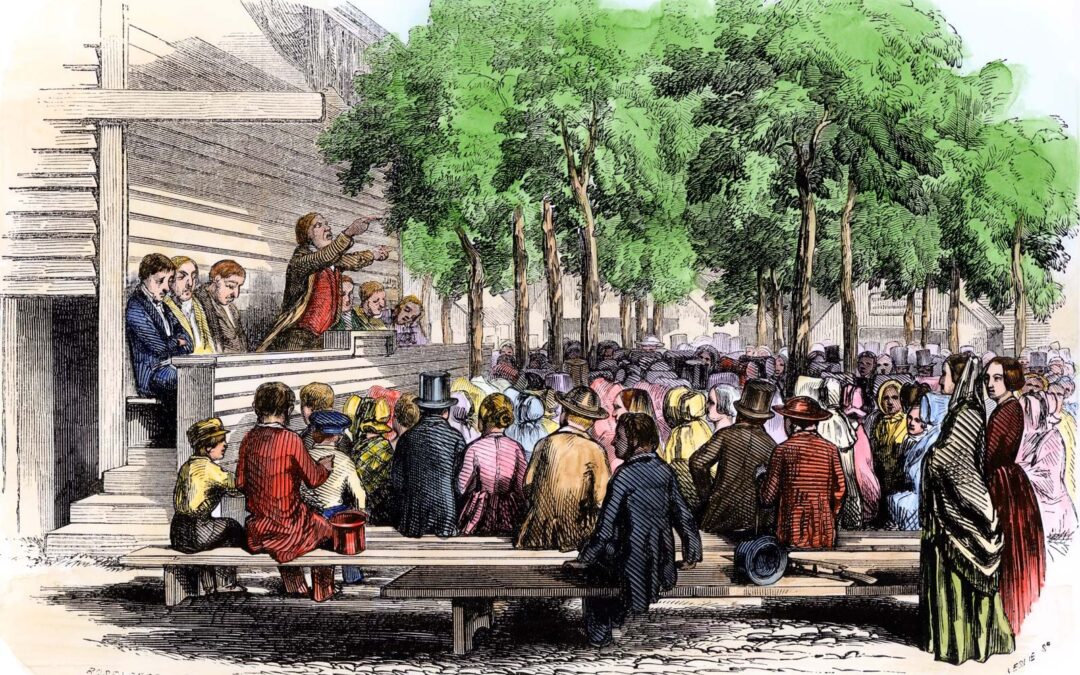
Recently, I have been taking something of a deep dive into early Methodist history. Specifically looking at not just John Wesley himself, but the early pioneers of American Methodism. As someone who did not grow up in the movement, I take seriously the responsibility to understand the place I now call my ecclesiastical home. There is so much of American Methodism to look at with thankfulness to God, for how those faithful trailblazers spread with the pioneers to bring the Gospel to the frontiers of America, leading Methodism to represent the biggest American denomination by the early 19th century.
Yet, with that heritage and legacy, when we look at Methodism today, we see a different story. With about 50 different Methodist/Wesleyan denominations in existence, with a broad range of theological takes and reasons for why they split, including more recent divisions, what has happened here?
In a paper about sacraments in early American Methodism, Paul Sanders writes this:
“Early Methodism in America had failed to achieve sufficient coherence to enable it to preserve the marrow of its legacy while at the same time adapting it to the demands of a new time and a new land. Although maintaining a halting loyalty to its Wesleyan heritage, the church was clearly more concerned with evangelism than with sacramentalism. Wesley’s synthesis was dissolved. As revivalism was not the same as Wesley’s evangelical ministry, so the confused sacramental
teaching and erratic sacramental practice of the Americans was not the same as Wesley’s own. The loss of the fertilizing vitality which results from keeping each close to the other was serious enough; but the loss was finally more serious. The church had been rendered peculiarly vulnerable to the infiltration of alien ideologies, and would find itself unable to maintain either evangelicalism or sacramentalism under the impact of the rise of rational idealism.”
I know there’s a lot going on in that paragraph, and I highly encourage you to look up and read Sanders’ paper, as he does a deep dive into Wesley’s sacramental theology and the importance it played in his life and ministry. And it is this major component that was missing for American Methodism, that didn’t allow for the “marrow” of Wesley’s legacy to endure in totality.
Looking at the reasons that led to this, I get it. You’re in America; you don’t have enough clergy to rightly administer the sacraments (both communion and baptism were an issue), and so very quickly the pragmatic realities set in. Even if you think things like weekly communion are important, you simply can’t do them, and they fall out of practice. And in this, I don’t fault my predecessors for how history went down. Could they have done something differently? Maybe. But I can’t make that call. All I can do is see where there were potential issues and try to course-correct from there.
So that leads us to the question. What was the fatal flaw? In my mind, from the research I have done, the fatal flaw was that early American Methodism didn’t solidify its identity because it failed to maintain the sacramental reality of Wesley’s life and ministry along with his evangelical zeal.
Because there was a lack of this cohesive identity grounded in the table, Sanders suggests—and I would agree and posit—that the multiplicity in American Methodist denominations exists because the sacramental grounding of the movement was not solidified. The focus became the practical necessity of expanding with rapidly growing America. And in this growth, cultural influences were able to weave themselves in at various times and in various places, leading to the muddled landscape we have today.
Now, in the 21st century, the Methodist movement has a new opportunity. With the major realignment of Methodism in the Global Methodist Church, the possibility is open for us across the board to look at where we came from, reassess who we actually are, and then put our noses to the plow of the Gospel work we have to do.
So what is this new path forward?
Recenter the table.
Now, it is a bit more complicated than that, but not by much.
As Methodists, we need to recapture the Spirit-fueled heart of our movement, which was the encounter with the Risen, Ascended, and Reigning Christ that takes place at Holy Communion. It means our pastors and our laypeople need to not just practice and participate, but also understand the how and why. To not just come and remember, but to come and receive the fullness of the work of Christ that He offers to His Church.
Yes, we need excellent preachers, and those who have a passion for evangelism to go out and proclaim the Word. That will always be essential, as it was for Wesley. But backing that up must be a thoroughly grounded understanding and practice of the means of grace. Not just as a catchphrase we use when talking about Wesleyan theology, but as the heartbeat of what we are about.
Looking back at our Methodist forebears, we have so much to be thankful for. They loved and served Christ faithfully. It is not to denigrate their lives and work for the Kingdom, but rather to see the fruit of what they themselves truly desired to see: an American nation captivated by the Gospel, and the power of Christ flowing to every believer as they receive Him week by week.
In the limited scope in which I’ve read the life and works of B. T. Roberts, I am thankful to be a Free Methodist. We have a place and a role in the Kingdom of God to accomplish His will on earth. And through recapturing the heart of Wesley’s life and ministry in the Table, we can bring to fullness what Roberts and others desired to see: a people who lived lives of holiness and set captives free.
What better place to do that than the meal that Christ instituted where it started for us all?