by Joel V Webb | Sep 28, 2026 | History, Methodism, Sacraments, Theology & Practice
In the study of the theology and practice of John Wesley one of the most evident realities was the very high place that John placed on the Sacraments. When you survey his journals it is obvious he celebrated the Lord’s Supper multiple times as week, and it became a cornerstone of the practice of the early Methodists so much so that it played a part in reshaping how often Communion was celebrated in Anglican parish life from as little as only a couple times a year (usually quarterly) to weekly.
But when it comes to the actual practice of the Methodist societies, class and band meetings, they are seemingly silent on their practice in those settings. While many a modern reader would take this silence to make it seem they were unimportant, I think when you read between the lines, a different story comes to bear. This question was recently pointed out to me by Rev. Dr. Doug Cullum, now retired pastor and faculty from Northeastern Seminary at Roberts Wesleyan University in Rochester New York.
We first need to work from the presupposition that Wesley did not set out to start a church. He was, in fact, a churchman in the Church of England, and remained so for the entirety of his life (something his brother Charles held strongly to as well). And, it wasn’t until the last few years of John’s life that a communion table was even present in one of the established Methodist gathering places.
This silence then is not because the Sacraments of Baptism & the Lord’s Supper were unimportant. Contrarily, they were seen as essential! But the nature of this silence or deficiency seems to be intentional, and it is from this place that we can come to understand the original purpose of Methodism.
John & Charles saw the Methodist movement as a renewal movement within the Church, not as a separate ecclesial movement. So with this in mind you can then see what this “sacramental deficiency” existed. Any Methodist society, class or band was for the spiritual growth of the individual to then go and be active and spiritually alive in the context of their local parish. It was then there where they were to receive the Lord’s Supper as often as it was offered, and to have their children baptized.
It was only when the Methodist movement, specifically in the American context became its own mother church in 1784 did the sacramental practice pass from the Anglican clergy to their own appointed and installed Elders. But what has happened over the last few centuries, as often does with the passing of time, is the loss of the context that provided the basis of understanding what was actually going on on that day.
If we look and see the lack of sacramental practice within early Methodism as an argument from silence, that the Evangelical focus that we are all familiar with was the sole focus, we then lose the full picture of who Wesley was, and the intent for what the Methodist movement was all about.
When you place the original Methodist movement within the context of an already existing parish system where the adherents of society, class and band meetings were already apart of, then it all clicks into place. What could be seen as intentional neglect or unimportance becomes in fact intentional deficiency; where the Sacramental need was already fulfilled in the churches these people were already members of.
What this then means for all forms of Methodism in the 21st Century, which now represent the status of “Mother Churches”, no longer a separate movement within an ecclesial body, but ecclesial bodies of their own is then the responsibility to faithfully administer the Sacraments of Christ. Baptism following birth or conversion, and the Lord’s Supper, weekly or more often as Wesley intended for his followers to partake.
It is this reality, both the Sacramental and the Evangelical that the Methodist movement holds in tension. Not in a contrary way, but in an complimentary way, understanding both for the need of the supremacy of the Word of God to drive us to personal relationship with Christ, and for Christ to then welcome us in through Baptism, and then continually feed us as He promised at the Table where He is both host and feast.
That is the picture of Methodism that Wesley intended for his descendants, a heritage we must reclaim and live in to.

by Joel V Webb | Sep 24, 2026 | Free Methodism, History, Methodism, Orthodoxy Matters, Sacraments, Theology & Practice
The following article, written by Free Methodist Bishop Emeritus Paul N. Ellis, presents a vigorous historical and theological case for the baptism of infants and young children within the Free Methodist tradition. Ellis argues that parents dedicate their children to God, while the church receives those children through baptism as members of the covenant community and pledges their Christian nurture.
Readers should approach the essay as a historical document and a constructive theological argument. Its language reflects the concerns and ecclesial debates of its original setting, especially the question of whether Free Methodists should replace infant baptism with child dedication.
The contemporary Free Methodist Church continues to affirm baptism as a sacrament and means of grace, and its Articles of Religion state that infants may be baptized at the request of parents or guardians who promise Christian formation. At the same time, current Free Methodist pastoral practice commonly recognizes parent-led infant dedication as an available alternative. The article below represents Ellis’s argument for recovering a stronger covenantal and sacramental practice of infant baptism.
This article was originally published in The Free Methodist Pastor, Summer 1983. is stored, and was scanned by the Marston Memorial Historical Center. You can read the original scanned article HERE
Parents Dedicate, the Church Baptizes
Paul N. Ellis, Bishop Emeritus
Winona Lake, Indiana
I have in my possession The Discipline of the Free Methodist Church, 1874, published fourteen years after the founding of our denomination. Article XVIII of the Articles of Religion includes the following constitutional guarantee:
“The baptism of young children is to be retained in the Church.”
From the beginning until 1974, this statement concerning the baptism of children was the denomination’s position.
In 1974, a new Constitution was adopted by the General Conference and ratified by the annual conferences. The new Constitution provided a fuller explanation of our historic position. Regarding baptism as a sacrament, Article XVII states:
“We believe water baptism and the Lord’s Supper are the sacraments of the church commanded by Christ. They are means of grace through faith, tokens of our profession of Christian faith, and signs of God’s gracious ministry toward us. By them, he works within us to quicken, strengthen, and confirm our faith.”
Regarding the baptism of young children, Article XVII affirms:
“Baptism is a symbol of the new covenant, and since infants are recognized as being included in the atonement, we hold that they may be baptized upon request of parents or guardians who shall give assurance for them of necessary Christian training. They shall be required to affirm the vow for themselves before being accepted into church membership.”
Accordingly, the bishops have made it clear to pastors that ministers violate their vows of ordination in the Free Methodist Church if they refuse to administer baptism to infants or children upon the request of parents or guardians. This is the historic position of the church.
Wesley’s View
The founders of Free Methodism, who felt called to “return to early Methodism,” agreed with Wesley on baptism.
In his Works, Wesley included “A Treatise on Baptism,” in which he wrote:
“By baptism we enter into covenant with God; into that everlasting covenant, which he hath commanded forever, that new covenant, which he promised to make with the spiritual Israel. . . . And as circumcision was then the way of entering into this covenant, so baptism is now. . . .
“Therefore, it is not only lawful and innocent, but meet, right, and our bounden duty, in conformity to the uninterrupted practice of the whole Church of Christ from the earliest ages, to consecrate our children to God by baptism, as the Jewish Church was commanded to do by circumcision.”
See Burtner and Chiles, A Compend of Wesley Theology (New York and Nashville: Abingdon Press, 1944), 266–68.
Inferences From Scripture
We must not forget that the Church of Jesus Christ from its beginning was—and remains—a covenant church, even as Israel was a covenant nation.
In Jeremiah’s promise of “a new covenant,” the prophet declares:
“Behold, the days come, saith the Lord, that I will make a new covenant with the house of Israel, and with the house of Judah” (Jer. 31:31).
The author of Hebrews identifies this new covenant with Jesus:
“Jesus is the mediator of the new covenant” (Heb. 12:24).
There is no dispute that circumcision was, and remains, the sign of the covenant relationship between God and Israel. An adult proselyte entering Judaism must be circumcised. Those born into Judaism, however, are circumcised on the eighth day after birth. The rite acknowledges the ancient covenant among faithful Jews.
In the New Testament, the recorded conversions and baptisms of households strongly imply the inclusion of children. Peter declared:
“The promise is unto you, and to your children” (Acts 2:39).
He did not qualify “children” with the adjective adult. Such a qualification would have seemed unnecessary to the early church, whose members were steeped in the tradition of family unity in matters of religion.
When Paul and Silas were released from the Philippian jail, we read:
“And he [the jailer] took them the same hour of the night, and washed their stripes; and was baptized, he and all his, straightway” (Acts 16:33).
Given the nature of family life in that day, one might expect a specific exception for “infants and young children” if Paul had intended to exclude children from the sacrament.
The classical statement in our baptismal ritual concerning the church’s acceptance of children in baptism is found in the words of Jesus:
“And they brought young children to him, that he should bless them; and his disciples rebuked those that brought them. But when Jesus saw it, he was displeased, and said unto them, ‘Suffer the little children to come unto me, and forbid them not; for of such is the kingdom of God’” (Mark 10:13–14).
A Methodist Scholar Speaks
Addressing the church’s responsibility to receive into its fellowship all those for whom Christ died when they themselves cannot yet make a choice, Olin Alfred Curtis writes:
“The church of our Lord has the right and the duty to claim the helpless. She should take into her atmosphere and association and, if possible, service all people who are unable to make a choice for themselves; not only all irresponsible children, but all the feeble-minded, and all those unfortunate souls who have been mentally wrecked by woes too terrible for human fortitude.”
Curtis describes this group as members “by Christian claim.”
He continues:
“If you ask what infant baptism precisely stands for as a rite, the answer should, I believe, be this: It stands for the sacramental acceptance by the church of the consecration unto Christ of a babe by a home.”
See Olin Alfred Curtis, The Christian Faith (Grand Rapids, MI: Kregel Publications, 1956), 420–21, 438.
A Presbyterian Scholar Speaks
John Frederick Jansen asks:
“Must a child be outside the church? Does not Baptism rather say that from earliest infancy I am brought into the environment of grace and receive the seal of God’s love? Of course an infant does not feel any effect. But who is to say how soon a child becomes aware of love, and why not divine love?
“What shall the church say to its children? Shall it forbid them Baptism? Shall it assume that there is no such thing as a Christian child? Are children outsiders in the church, or are they members of the household of faith? If the old Israel included its children in the family of faith through circumcision, shall the new Israel exclude them?”
See John Frederick Jansen, The Meaning of Baptism (Philadelphia: Westminster Press, 1948), 102, 108.
Some Personal Observations
- Baptism does not regenerate either adults or children. For an adult believer, baptism is a sign of the covenant of grace entered into by faith; a public confession that the believer trusts in Christ’s atoning work for salvation; and a means of grace. For an infant, baptism is likewise a sign of the covenant of grace and a confession by the parents and the church that children are saved—not because they are innocent, but, as are all people, because of the universal atonement made by Christ for the human race. I also believe strongly that baptism is a means of grace to the child. Do we not pray for our children? Do we not anoint them with oil for healing? Should we think grace is given only to persons old enough and rational enough to understand fully the sacrifice of Jesus Christ? If so, who may be baptized? Who understands it fully?
- Parents dedicate the child; the church baptizes the child. Dedication is made by the only persons who can give a child to God: the parents. In baptism, the church accepts the child in a formal yet spiritual manner and pledges, in cooperation with the parents, to confirm that child in the Christian faith. It is meaningless for the church to assume that it can dedicate a child whom it has not accepted into the family of God.
- The Free Methodist Church historically stood within the classical catholic tradition of baptizing children. Until comparatively recent years, the Free Methodist Church stood alongside the Roman Catholic, Eastern Orthodox, Episcopal, Reformed, Presbyterian, Methodist, and other churches of Catholic, Calvinian, Arminian, and Wesleyan traditions in recognizing the baptism of children as a valid sacrament of the Church of Jesus Christ. Today, we are being influenced, to our loss, by Baptistic branches of the church, including the Churches of Christ.
- Replacing baptism with dedication departs from Free Methodist intention and doctrine. In my opinion, Free Methodist pastors who persuade members to have their children “dedicated” rather than baptized turn away from the intention of our founding fathers, fail to transmit the letter and spirit of our Articles of Religion, and miss a significant opportunity to witness to the covenant character of the church.
- The New Testament church was not merely a believers’ church. It was—and continues to be—a covenant church. It receives believing adults into its fellowship, as Judaism has always done, but it also includes the whole Christian family until, if it should occur, a growing child turns away from that fellowship in unbelief, just as an adult may do.
- The nurture of children is therefore of supreme importance. We believe that a child’s confession of Christ as Savior—even at four or five years of age, or perhaps younger—can be valid. Therefore, we have a solemn responsibility to confirm our children in the Christian faith, guide them in Christian love, and bring them to an adult experience of Christ through the revelation of the Holy Spirit. The vows of adult baptism and church membership can become meaningful to a child who is assured that the church has received him or her from infancy into the loving family of God.
by Joel V Webb | Sep 20, 2026 | History, Orthodoxy Matters, Sacraments, Theology & Practice
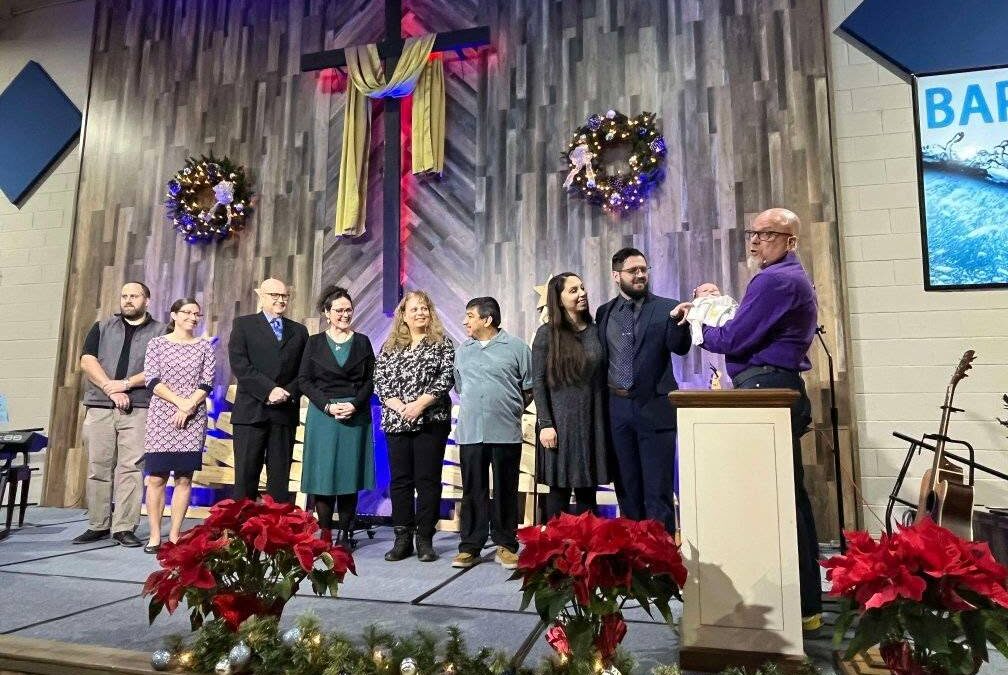
I confess one Baptism for the forgiveness of sins…
This phrase of the Nicene Creed is declared in my church, like many around the world every Sunday. Much of the time we might not think about it too often, yet it carries much significance. I’ve written about Baptism at other times, and while there is various disagreement surrounding this Sacrament of entrance into Christ’s Body (the Church) very few orthodox Christians groups ignore its importance.
In this particular case I want to focus on the ONE portion of the Creed’s statement in regards to Baptism.
One means one. Article over I guess…
I wish. While this question does come up, for those churches that confess and take seriously the Nicene Creed there is something in common. They do not rebaptize. Baptism, as a Sacrament is seen as a one time act that happens, through which the person (infant or adult) is joined to Christ’s death and resurrection, being opened to and receiving grace by the Holy Spirit, and, drawing from St. Paul in Colossians 2, is a circumcision not done with human hands (v.11-12). Likewise, St. Peter in the New Testament makes the bold claim that baptism now saves (1 Peter 3:21).
The point here is not to get into the weeds on the question of baptismal regeneration and the working of faith. But suffice it to say, baptism is really important. And it is only ever done once. To continue to echo the words of St. Paul in Ephesians where he writes, “one Lord, one faith, one baptism” (Eph. 4:5).
One could then ask, what counts as a valid baptism? How the what we would now call Nicene faith answers is any baptism done in the name of the Father, the Son & the Holy Spirit is a valid Baptism. Why? Primarily because there are non-Trinitarian groups that may baptize only in the name of Jesus. While texts in Acts (2:38; 8:16; 10:48; 19:5) speak of “baptizing in the name of Jesus”, it seems to be referring to the baptism’s identity and authority, not the actual formula.
In regards to Scriptural data, the most evident come from the words of Christ Himself in the famous Great Commission when He commanded the disciples to, “baptizing them in the name of the Father and of the Son and of the Holy Spirit” (Matt. 28:19). Likewise, the earliest church discipleship manual The Didache very clearly states, “Baptize into the name of the Father and of the Son and of the Holy Spirit.” and thus it speaks to the practice of the early church being what Christ commanded in Matthew, not a later development.
But what changed?
Well…as always. Heretics.
The first major debate in regards to Christian baptism came around 255–257 between Cyprian, bishop of Carthage, and Stephen, bishop of Rome. Their point of contention was if people who came into the orthodox faith from a heretical group needed to be baptized. To simplify the debate, Cyprian said they needed to; Stephen said as long as it was in the Trinitarian formula then they were set. The Sacrament was valid, no rebaptism needed. Sadly, both men were martyred before a resolution could be settled.
Next then came the post-Diocletian debate surrounding baptism. A heretical group named the Donatists stated that any clergy who handed over holy books to the Romans during persecution did not have legitimate ministry, and thus, their baptisms were invalid. Likewise, questions arose whether those Christians who recanted the faith to save their lives, and sought to come back into the Church needed to be baptized again.
St. Augustine of Hippo weighs in here and really sets the precedent that Western Christianity follows. Because Christ is the primary operator in Baptism, the “baptizer” (person doing the baptizing) does not impact the validity of the baptism itself as long as it was done in the Trinitarian formula. And, for those coming back into the Church (there was ferocious debate whether or not to let them back in), they did not need to be rebaptized because the work of Christ at their Baptism was still effectual. Even in the Council of Trent in response to the Reformation, the position of the Roman Church to this day is that even a Baptism done by a heretic or pagan; as long as it is done in the Trinitarian formula it is valid.
A brief sidebar before moving on. This point of Christ being the primary actor in Baptism is what by definition makes it a Sacrament. If we are joined in His death & resurrection, and if there is a circumcision that happens, not of human hands to us by God at Baptism…it is not the kind of thing that can be repeated. But, if you just see Baptism as some kind of ordinance, or just a visible sign of an interior faith or decision, then it doesn’t actually mean anything and you can do it as many times as you want.
While there are certainly many other moments in Church history to touch on, the next biggest one comes during the 16th Century and the Protestant Reformation. Despite what many American Evangelicals might believe, Luther, Calvin & the English Reformers, while they certainly had their disagreements with Rome, they didn’t throw the baby out with the bathwater (pun intended). They all still held to some form of Christ truly being present in the Eucharist, they believed in Baptismal regeneration, held to some of the Marian dogmas, and had other views that would shock many today.
But it was the radical reformers who took things to the next level. It wasn’t good enough to separate from the accretions and power structures of Rome, you had to get rid of it all. (I wrote a piece on the radical reformers, and how I DO NOT like them at all. Despite their good intentions). One of the practices that rose among them was the rebaptizing of believers, even those who had already received baptism as infants. This is where the major break takes place in Chrisitan theology and practice in the Church. Now called the Anabaptists (a name given to them by their opponents), the practice is now found among many Chrisitna groups in the West; among groups like actual anabaptist denominations (Mennonites, Missionary Church), Baptists (Reformed and not), and generic American Evangelicalism. I know this part is very brief, and does not cover the full extent of their beliefs and practices, but you get the jist.
So now the big question comes. What stream are you in?
If you are someone who is a Methodist of any stripe, be it Free (like myself), Global, United, Nazarene, Wesleyan etc… your theological roots and inheritance is not found among the radical reformers. It is of the English Reformers like Thomas Cranmer, Lancelot Andrews and Richard Hooker, who like Luther & Calvin did not get rid of the ancient practice of the Chrisitan faith from the Early Church as likewise demonstrated in Scripture. So what does that mean? It means we should not do rebaptisms.
Why? Because Methodists, as our Anglican forebears do, believe the practice of Baptism is a Sacrament. It is an act by which God is the primary actor. Sure, as a parent I bring my child, or a recent convert comes to be baptized; but it is God who is doing a work. Something indelible, that only takes place once.
For those who have been baptized as infants, the continuing of that work happens at Confirmation where that faith entrusted at infancy is carried on by that young person as their own. Or, for someone who maybe has walked away from Christ for a time, and has come back to the faith, there are beautiful services where the vows taken at baptism are reaffirmed and renewed.
But as Methodists we do not rebaptize. Not because we don’t care about people who have come back to the faith or don’t remember their baptism because they were a baby, or didn’t understand the significance of it when it happened. We don’t rebaptize because You can’t repeat circumcision. Whatever the whole work that Christ does in us is marked once, and we then spend the rest of our lives receiving grace from Christ to live into our baptisms.
Whenever we look at the story of Scripture and our own lives it is never God who is faithless and who fails. It is always us. What God did worked. Yes, we need reminders and encouragement, but why do we think we need to repeat something that God only needs to do once?
Baptism matters. God does something in Baptism. Treat it that way.

by Joel V Webb | Aug 31, 2026 | Sacraments, Theology & Practice
Protestant Christians have two Sacraments, ordained by Christ. Holy Baptism where one enters into the people of God. The second is Holy Communion, the Christian Passover, where we come to not just remember His death, but where we receive His grace as we encounter Him in eating and drinking. These two Sacraments have been central to the identity and practice of the Christian Church for its entire history.
It is especially in Holy Communion where as Christians we encounter Christ. As Scripture shows over and over again, worship requires a sacrifice of some kind. And, as those redeemed by the worthy Lamb the sacrifices of old have been replaced by the celebration, remembering and participation in His sacrifice, i.e. Holy Communion.
But something has happened over the last fifty years in Evangelicalism. A new “sacrament” has creeped in and has become the predominant place where we are told encountering Christ really happens. Worship music. The expectation of most modern evangelical worship services is that the primary place where you are meant to “encounter and feel God” is during the time of singing and worship.
When a congregation is trained to expect that God is most immediately present during a musical crescendo, what does that do to the church’s understanding of the Word, the Supper, prayer, and ordinary discipleship?
In a recent article from Christianity Today they addressed the massive amounts of pressure that “worship leaders” face to perform their jobs with excellence.1 And as a part of that are expected to make experiences and times where people feel the presence of God. The point of this article is not to address the “worship leader” label, something I hope to do in a future blog post. But to ask the question, is music in church supposed to do this?
The Christianity Today article on worship-leader burnout illustrates one pastoral consequence of this expectation: musicians can come to feel responsible not only for leading songs well, but for generating the conditions in which a congregation believes it will experience God. The article does not create the problem, but it helps reveal how deeply the expectation has taken hold.
You see, this expectation that we were meant to “encounter God” in a personal way during a time of singing is a very recent innovation in the Church, and does elevate the use of music in a church service to the status of a Sacrament. If a Sacrament is an action or ritual where God’s grace is encountered and received, then it certainly has done so. A sacrament is not simply any moment in which Christians are helped, moved, or strengthened by grace. It is a rite instituted by Christ and joined to a visible sign through which he promises to act for his people.
The problem is not that Christians may encounter God while singing, nor that music can move the affections. The problem arises when emotional intensity becomes the expected proof of God’s nearness, and when the congregation is implicitly taught that the Spirit is most active during the musical set rather than through the whole ordained worship of the church.
This is not to say singing is not a means of grace. It most certainly is. As the gathered Church sings praise to God, it is both a part of us demonstrating our love to Him, and it is edifying to the believer. Another benefit is that songs and hymns teach us the truths about God just as St. Paul encouraged (Ephesians 5:19). Maddox in his work Responsible Grace talks more specifically about hymns in the Methodist context were to both empower and encourage, and should be aligned with the rhythm of the Church calendar to shape and form the believer2.
The understanding of songs for this purpose is dramatically different that was normally understood in our Evangelical culture today. Rather the current expectation is that when we sing songs (usually a block of 3-4 songs in immediate succession in the first half of the service), it is during this time that the “atmosphere” is set and that it is the time the Holy Spirit moves and works and people are to “feel His move”.
Understanding the purpose of worship music, as already stated, is a very recent innovation. The role of music in the history of the Church has almost always been in support of the ministry of the Word and Table for the Sunday gathering. Any hymns, canticles, Psalms or other songs that are sung are done so throughout the Sunday service. An opening song, a song before the Gospel reading, musical settings to the Eucharist liturgy, songs sung or played during the distribution of the Sacrament, and some kind of hymn or song to close the service has been, with many variations, but the general same shape the norm of Christian worship.
The biggest contention I have with how modern worship music is perceived is that it has taken the primary and predominant place of the Blessed Sacrament as C.S. Lewis calls it. Even my own denomination of Free Methodism that speaks highly and centrally of the Lord’s supper as a primary means of grace has functionally replaced its use with the modern conception of worship music as the primary place of encountering God. While it is not stated, it is practiced. Johnathan Aigner offer this as what is offered in a Word & Table conception of worship:
Christ offers us everything in worship, for he offers us himself. There is where we find true meaning. In the gospel. In the Word rightly preached and the sacraments rightly administered. In a rich biblical liturgy that preaches truth to our hearts. In the discipline of the church year.3
What are we to do? I would like to offer two potential steps in recovering the both the right understanding of music in the worship service as a whole, and returning to the centrality of the Table as the central focus of the Sunday gathering.
- Don’t look to emotional experience as the primary litmus test of attending Sunday worship. As I have already addressed in a previous post about the topic, our emotions are a terrible standard to derive whether we have encountered God or not. We have been relentlessly catechized in our modern Evangelical culture to look to our emotions (which are so easily swayed) as to whether we have met with God or not. Stop. Yes, emotions play a role, and they were created by God. But what we have functionally done is turn them into the standard we follow.
- Sing to know and declare, not just feel. A further extension of the first point is to reorient why we are singing. The declaration of truths about God and His mighty works are not just for us and those around us, they are a declaration to the spiritual world (1 Peter 1:12). When music becomes about giving us an emotional feel, we distort what we are there to do. Yes, emotion can and should be expressed in singing, but the purpose of that is to bolster the decoration of who God is and what He has done.
Keep singing. Don’t stop. Music has always been an important part of the expression of the Christian faith. But at the same time it is not a Sacrament. God has already given us his instituted means of grace, why would we replace them with something else?
by Joel V Webb | Aug 13, 2026 | Free Methodism, Sacraments, Theology & Practice
In the Free Methodist Book of Discipline (2023), the phrase ‘means of grace’ is used 10 times throughout, as it should be as the guiding constitutional document for a denomination in the Methodist tradition. While an actual definition is not found within the BOD (it is presumed into the book), that the means of grace can be understood as, “ a broader category referring to all the ways God has appointed to convey his grace to men and women.”1 Simply put what this means is that God has established ways for those in the Church to receive His divine enablement for Christian love and service.
There are many actions that are conduits of God’s grace to people. Everything from preaching, prayer, Scripture reading, Christian fellowship, singing and the list goes on. All of these things are good and necessary parts of Christian life and practice both individually and corporately. And, they are yet eclipsed in effectiveness2 as a means of grace by the two Sacraments that Christ Himself instituted and commanded; Baptism and the Eucharist.
Paragraph 123 of the BOD states:
Water baptism and the Lord’s Supper are the sacraments of the church commanded by Christ. They are means of grace through faith, tokens of our profession of Christian faith, and signs of God’s gracious ministry toward us. By them, He works within us to quicken, strengthen, and confirm our faith.3
And, if you go to the two subsequent paragraphs, each detailing the specifics of our Free Methodist understanding of Baptism and the Eucharist, the language about God’s work in and through these Sacraments is even stronger. All of this to say is that according to our Book of Discipline, the Sacraments should have predominant place in our theology and praxis.
From this I urge Free Methodist congregations to move toward weekly celebration of the Lord’s Supper as the normative goal, while recognizing that pastoral, logistical, and conference-specific circumstances may require a staged path toward that goal. This is not a call to adopt a particular worship style or to diminish preaching, prayer, Scripture, fellowship, or works of mercy. It is a call for our practice to reflect our confession that the sacraments are Christ-commanded means of grace.
I now ask the challenging question. If we affirm what our BOD states (something ALL clergy must do), as the Apostolic teaching of the Church carried through our Anglican heritage into Methodism and then through to us today, why do we withhold them from our congregations?
This question specifically applies to our practice of the Lord’s Supper, as there is not usually a question about the importance of Holy Baptism (even if many hold a more anabaptist view). John Wesley himself felt very strongly about this matter as well. We might go straight to his sermon The Duty of Constant Communion (which I encourage all to read), but rather point our attention to Sermon 26, on the Sermon on the Mount where he said,
“It was the judgment of many of the ancient Fathers, that we are here to understand the sacramental bread also; daily received in the beginning by the whole Church of Christ, and highly esteemed, till the love of many waxed cold, as the grand channel whereby the grace of his Spirit was conveyed to the souls of all the children of God.”4
The grand channel of his grace. This is important and we should not miss it. Wesley is not saying that there are no other means of grace, there certainly are. But what is being claimed, as affirmed in both Scripture and the early church, is that the Table is the primary place that God gives His grace to the Church. This claim likewise is bolstered by the fact that the early Methodists in England were namecalled as sacramentarians for their insistence on frequent celebration of the Lord’s Supper.
So I pose the question again for effect. If this is our Methodist belief and understanding of the Lord’s Supper, as affirmed in Scripture, through Wesley and in our BOD; why do we so constantly withhold it from our churches?
I do not mean that Free Methodist clergy are indifferent to Christ or careless toward their people. I mean that, as a denomination, we have tolerated a pattern of sacramental neglect that can deprive congregations of regular access to a means of grace Christ has commanded and our Discipline commends it. The FMC pastors I have met and know, faithfully preach the Word to their congregations to the churches every single week. And I praise God for that, and commend them for that. Yet, that is only the job. We are stewards of both Word & Sacrament. And if a job is only half-done, is it truly done?
One contributing factor is the way broad evangelical, anabaptist inclined and excessively revivalist habits have shaped many non-mainline Protestant churches, sometimes more deeply than their own confessional and theological inheritances. Congregations understandably observe practices that appear to produce engagement, growth, or visible response and seek to adopt them. Yet such borrowing can become uncritical when we ask only whether a practice appears effective, rather than also asking what theology of grace, conversion, the church, and worship that practice assumes.
A related concern is a significant shift in the way worship is understood and ordered. In some settings, the regular pattern of Word, prayer, praise, and the Lord’s Table has yielded to a service structured chiefly around musical affect, preaching, and an invitation for an immediate response. Contemporary worship music is not itself the problem, nor is an earnest call to conversion. Both can serve the church well. The danger arises when emotional intensity or a visible response becomes the expected climax of worship, while Christ’s instituted means of grace, particularly the Table, are treated as occasional additions rather than a regular act of the gathered church.
This pattern bears resemblance to the revivalist logic associated with Charles Finney’s “new measures,” including the anxious bench: practices designed to elicit an identifiable, immediate decision. The concern is not that people should not respond to the gospel. They must. The concern is that the church may come to measure worship chiefly by the response it can produce, rather than by whether it faithfully gathers the people of God around Word and Table, through which Christ has promised to minister his grace.
My purpose is not to stir indignation against or to accuse faithful pastors and churches. It is to call my Free Methodist brothers and sisters, from laypeople to bishops, to receive afresh and to faithfully and regularly use the means of grace Christ has entrusted to his church; especially the Lord’s Supper. Those of us ordained for ministry are charged not only to proclaim the Word, but also to administer the sacraments; we should therefore seek to order the church’s worship in a manner consistent with that charge.
The regular participation of the table is not just for liturgical churches. While the church I serve, as well as several others such as those in Rochester, NY and Boise, Idaho are irregular expressions for our denomination; there are a growing number of churches that are both contemporary and everything in between that are becoming more sacramentally minded and celebrating communion weekly. This call is not about a specific style or formula of worship, it is rather a call to pursue the things Christ has given His church, and that we as Methodists have from the beginning said are important.
I am so appreciative of our denomination’s pursuit of seeking Christ as to how the Free Methodist expression of the Church is called to impact the world. Our desire to seek together, become a reignited Spirit-fueled movement, to see the living giving holiness of Christ made in each person, and the justice of the Gospel be wrought by our churches in our communities. I am moved by, and love who we feel God is calling us to be. Now, how do we enact it?
It is at the table, primarily that we encounter Christ. We wish to encounter the life giving power of the Holy Spirit, that makes us holy and into the express image of Christ Himself. What better place than where Jesus has promised to encounter us as we eat and drink in faith! We desire justice to flow like a river, as we love mercy and walk humbly before our God. What a better place than where justice was served. Where God Himself gave Himself freely for others as we are called to do likewise! We seek for holy moments where people meet with and do business with the Lord. What a better place than where, again, we know He is. In the breaking of bread that we know He is there, where there is a participation, a koinonia5, with Jesus Himself!
We are looking for answers and solutions to what we see as the problems facing the Church, especially the Church in the West. Yes, these are very real issues we must grapple with. And what if the answer has been before us all along? What if, as we come, truly in faith to the place where Jesus is, at the altar in the bread and the cup that we receive the grace and power of Christ in the Holy Spirit.
So what are the next steps?
Pray and read.
First, pray. Pray that the Holy Spirit opens your eyes to the work that He desires to do in you and your congregations as you come around the Table. Celebrating the Sacrament does not do anything on its own. His power is there when we come in faith, knowing that He is working as He has promised. If you are laity, pray as well. Pray that your pastor comes to see the immense power that Christ promises to endow to His Church through His instituted means.
Second, read. Do a study first of all in Scripture. Look at the pattern of the Passover feast, and how much worship elsewhere in Scripture meant actual consumption of food. Then in the New Testament look at how central the Table is to the identity to the life and practice of the Early Church. Then from that foundation look at the Church Fathers, Scholastics, Reformers, Wesley and others like Thomas Oden and see how essential and central the Table is to not just out practice as Christian, but our identity6.
As these things come together; prayer, study, renewed teaching, and faithful practice, we will more fully receive the grace Christ has promised to give his church at the Table. The Lord’s Supper is not an empty ritual or a technique for producing spiritual results. It is a Christ-commanded means of grace, the “grand channel” through which the Holy Spirit strengthens his people in faith, holy love, and service.
As we come regularly in faith, we are continually reminded of Christ’s saving work and receive its benefits anew. Our identity is more deeply rooted in him; we are formed as one body, nourished for holiness, and sent to love our neighbors in the power of the Spirit.

by Joel V Webb | Jun 29, 2026 | Orthodoxy Matters, Sacraments, Spiritual Disciplines, Theology & Practice
There is a lot of buzz in our modern world talking about discipleship. Everywhere you turn there seems to be a new video series, course, or initiative that promises to be the next big thing in discipling the people in your church! And, as often happens with this kind of stuff, while it may be very good, it certainly doesn’t do all that it has promised. But why is this the case? Firstly, it is not about the intention or desire of those wishing to disciple or create this content. Everyone involved has a serious and deep desire to see Jesus transform people’s lives, and to make them disciple making members of God’s Kingdom. The good intentions and love of Christ are not what is questionable here.
I believe more fundamentally in the modern evangelical space, we have somewhat forgotten what discipleship is all about. So many of the pipelines or pathways of discipleship I hear about are all looking to keep people coming back every week, get involved in volunteering, inviting other people to church, and Lord willing to start giving. None of these actions are bad, and we certainly want to see them happen. But, these are not the point of discipleship.
The theological capstone of being a Methodist is the idea of Entire Sanctification, or Perfect Love. Simply put, the work of the Holy Spirit has done its work (to the extent possible in our mortal human lives this side of eternity), where our love has been transformed, and while we are not perfect in performance, our love is wholly set on Christ. Certainly sounds like a lofty goal, but John Wesley and his theological descendants certainly believe it is possible. Where many Methodists stop is looking back to where Wesley was inspired to understand this as the goal of the Christian life, and that comes from the Eastern Orthodox position of theosis. Similar in end, theosis, or deification, where the believer achieves unification or the likeness of God.
Now, this might seem like too much for some, and I certainly get it. But if we look at the Biblical data, we see that ultimately the goal of the Christian life is to look like Jesus. To be His image bearer. While sin entered the world and broke us, Christ in what He has done has paved the way for us to do what we were originally created to do: embody His character and co-create within His good creation.
But if this is the actual goal of the Christian life, how have we gotten to where we are today? Well, in my estimation, much of our discipleship material is decidedly more informational and training based than it is anything else. Fundamentally what we have forgotten is the Christian faith is not a set of ideas you are convinced of and believe. It is a way of life that you embody and engage the world with. It has been a product of post-enlightenment philosophy that has relegated personal belief and faith to a set of ideas, and not an all-encompassing way of life.
When we look at the Old Testament, through to the first centuries of the Church we see not people changing where they go on weekends, but a fundamentally different way of life. And in losing this way of thinking, we have forgotten how to do discipleship. Not because we don’t love Christ, or love people. But because we are limiting something that is supposed to have full reign of our entire being, and turned it into a training program.
So all this being said, what does ancient discipleship look like? It can be boiled down to two primary pillars. Spiritual Disciplines, and the Means of Grace.
Richard Foster describes spiritual disciplines as practices that help us draw closer to Christ and experience spiritual freedom, not as ends in themselves. They are the actions that through encountering Christ in the build up our character and relationship with Christ to know Him more. Practices such as prayer, reading, fasting, silence, giving, worship, celebration and more. I highly encourage people to read Foster’s book, Celebration of Discipline. This classic lays out the forms and flow of the main Christian disciples that make up the Christian way of life.
More than just building up our lives, spiritual disciplines are also essential because they ultimately form what we love. Through repeated and intentional action, doing these things form and shape our minds and lives in a certain way. We are creatures of habit, and when we get set in a way of doing things, it is part of what makes us who we are. So by daily participating in spiritual disciples, we encounter Christ, and we also shape our lives around Him.
Means of Grace as traditionally understood in the Christian faith, and in Methodism are those ways by which God imparts His grace to the believer. Grace is easily understood often as two different things. Unmerited grace and also divine enablement. It is the latter especially that is important here. Because we know as humans we are unable to do what we are called to as followers of Christ in our own strength (or at least I know I can’t!), there are certain ways Christ has promised as channels through which the Holy Spirit endows and bestows His strength and enablement.
With this the first question is, “can’t the Holy Spirit do that without a specific physical means?” Sure He can. But what the Christian faith has always believed is that stuff matters. We are not totally disembodied, and our encounters with God are not just subjective, internal experiences where we meet Him. We are physical beings as much as we are spiritual beings. We cannot get away from stuff, and to disconnect the two is an unfortunate recent trend in particularly the Evangelical world that smacks of a tacit gnosticism that disdains the physical.
It does not mean that God cannot and does not meet us in times of prayer, singing, silence or in hearing the Word. He certainly does do all of those things! But we can never forget that He has also, through His Church, ordained and established various physical means that we know by faith we encounter Him and receive His grace.
Of course there are the Sacraments (which we will talk about in a moment). But there are also other means of grace that are not Sacraments that people have seen how Christ endows His enablement to His followers. Mattox, in his book Responsible Grace, has quite a list of those non-Sacraments means of grace that Wesley recognized. In more traditional expressions of the Church these are called sacramentals. Other means from the Sacraments that grace is given.
The two Sacraments the Protestant world recognizes (I talk about them HERE) are those of Baptism and the Eucharist (Communion/the Lord’s Supper). In Baptism, the initiatory Sacrament there is grace conveyed to the believer as Christ, not the baptized is the primary actor and agent (See St. Paul in Colossians speak about Baptism). The specific effects of the grace conveyed at Baptism are discussed, debated and understood differently. John Wesley spoke about sinning away his baptism by the age of 10 or 12. But what is undisputed is that Baptism brings the person into the Church, and they are given grace, whether they are an infant or a newly converted adult.
The second of course is the Table. The pinnacle and high point of Christian worship universally for the first 1500 years of the faith, and still for much of the Church in our day. Celebrating Communion is not just a remembrance of what Christ has done, but is also a reception of the benefits of His work on the cross. It is here that we encounter Jesus as both the host of the feast, and as the meal itself. Just as the consumption of the Passover Lamb was an essential part of being saved, likewise in the consuming of the perfect Paschal Lamb, we too receive grace and our salvation as we eat and drink in faith.
It is these two things, the spiritual disciplines and the means of grace that a Christian is discipled. The disciplines are like a lattice that is built. It is a structure or a framework of the Christian life. And then through the means of grace, that life grows, is nourished and eventually fruit is produced. What distinguishes this understanding of discipleship from more modern forms we often see is that this is life encompassing, not just for a time on Sunday and sometime else during the week.
The spiritual disciples are elements we should build our days around. Morning, Midday, Evening & Compline prayer as the traditional offices of the Church provide an opportunity to keep our hearts and minds on the goodness of God, and our ever need for His help. Regular reading and studying of Scripture keep us in constant understanding of the person of Jesus Christ that Holy Scripture points us to. Fasting empties us of our physical strength so that we can better rely on His strength. These, and the other spiritual disciplines construct and formulate our lives around a life knowing it is for God, and God alone that we live. Rather than the modern secular practice of fitting our faith in our life as another thing, classic Christian discipleship recognizes life is truly lived the other way around. We construct our lives around the truth of the world as explained and lived out in the Christian faith.
Then, as that structure is being built we are then nourished by the means of grace. Yes, the spiritual disciples in and of themselves are also offered as means by which Christ, through the Holy Spirit gives His graces to us, and then it is with these others, especially the Lord’s Table that we are nourished. If the spiritual disciples are common means of grace, the Lord’s Supper is as John Wesly called it “the grand channel of God’s grace.” It is not just one among many of the ways God gives His grace to us, but is the primary ordained way in which we encounter the Spirit and are enabled and empowered for the Christian life.
Sure, other kinds of studies, small groups and opportunities for learning the nuts and bolts of the faith are essential and important, but they must be done in conjunction and subject to the work of how the Church has always discipled new believers. Not just by being informational, but first transformational through spiritual disciplines and the means of grace, and then build up with information.